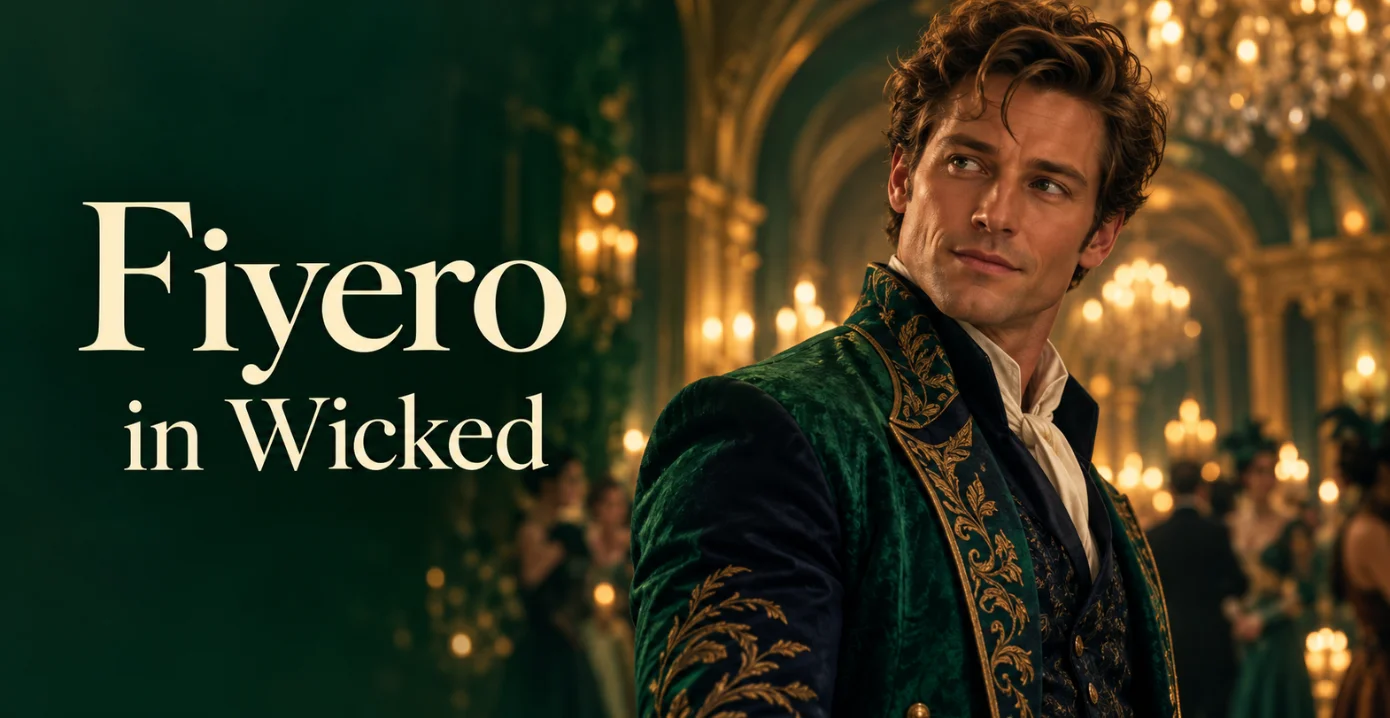
Fiyero is one of Wicked’s most important supporting characters, even though he first appears remarkably carefree. He arrives at Shiz University as a charming prince who prefers fun over rules. His relationships with Glinda and Elphaba eventually push him toward a far more dangerous path.
His story also creates one of Wicked’s biggest connections to The Wizard of Oz. Jonathan Bailey plays the character in the two Universal films. The second movie reveals how his fate becomes tied to one of Oz’s most recognizable figures.
| Key fact | Details |
|---|---|
| Character | Fiyero Tigelaar |
| Story world | Wicked and the Land of Oz |
| Film actor | Jonathan Bailey |
| First film appearance | Wicked (2024) |
| Sequel | Wicked: For Good (2025) |
| Main relationships | Glinda and Elphaba |
| Major musical number | “Dancing Through Life” |
| Ultimate identity in the musical and films | The Scarecrow |
Direct answer: Fiyero is the charming prince who meets Glinda and Elphaba at Shiz University. He begins as a carefree student but becomes increasingly loyal to Elphaba. His choices eventually put him at odds with the Wizard’s regime, leading to a transformation that ties his story directly to the Scarecrow.
Who Is Fiyero in Wicked?
The prince enters the story confident, wealthy, and determinedly unserious. At Shiz, he encourages other students to stop worrying about expectations. His early attitude drives the energetic “Dancing Through Life” sequence. That playful image does not tell the whole story.
He becomes increasingly uncomfortable with the injustice developing around him. His connection with Elphaba reveals a more thoughtful, courageous side. That change is central to his appeal. The story does not simply turn a shallow prince into a romantic hero. It shows how empathy can force someone to reconsider an easy life.
Why Does He Initially Fall for Glinda?
Glinda and the prince appear well matched when they first meet. Both are attractive, socially confident, and comfortable attracting attention. Their early relationship fits the polished world surrounding Shiz University. Their romance also reflects who each character thinks they should become. Glinda is drawn toward status, acceptance, and public approval.
He initially shares enough of those instincts for their relationship to feel natural. Yet their connection strains as his priorities shift. He starts questioning the system around them more openly. Those doubts eventually make his bond with Elphaba more important.
Readers interested in other screen performers can also explore BlogsNBytes’ profile of actor Laysla De Oliveira. Her career provides another example of how television and film roles can shape public recognition.
Why Does He Love Elphaba Instead?
Elphaba challenges him in ways that Glinda initially does not. She refuses to accept cruelty simply because authority approves it. Her convictions make him examine the consequences of staying detached. Their connection becomes clearer after they work together to protect a lion cub. That experience reveals shared compassion beneath their different personalities.
Cineworld’s character summary also identifies this rescue as a key moment in their growing relationship. The romance therefore grows beyond physical attraction. Elphaba sees intelligence and concern beneath his careless image. He sees someone willing to act when remaining comfortable would be easier.
That contrast makes their relationship important to the larger story. Love becomes connected with moral choice rather than simple romantic preference. His loyalty gradually costs him the protected position he once enjoyed.
How Jonathan Bailey Plays the Character
Jonathan Bailey portrays the prince in Wicked and returns in Wicked: For Good. Bailey was already widely known for Bridgerton before joining the Oz films. His casting added considerable attention to the character. The performance relies heavily on movement and dialogue.
Bailey described the character as someone who creates chaos because he avoids stillness and deeper emotional exposure. That interpretation helps explain why his early confidence feels both appealing and defensive.
Casting directors Bernard Telsey and Tiffany Canfield reportedly pursued Bailey despite major scheduling conflicts. They felt his audition captured the humor, vulnerability, and charisma the role requires. Their persistence proved important because the role needs more than conventional romantic charm.
BlogsNBytes regularly covers public figures and career stories beyond fictional characters. Its recent Savannah Guthrie career and net-worth profile offer another entertainment- and media-focused read.
The Scarecrow Connection Explained
Major spoilers for Wicked: For Good begin here. The character ultimately becomes the Scarecrow known from the larger Oz story. IMDb credits Jonathan Bailey as both the prince and the Scarecrow in the 2025 sequel. The transformation follows his decision to protect Elphaba from the Wizard’s forces.
She attempts to save him through magic after his capture. The spell keeps him alive, but his body is changed into straw. That outcome gives earlier moments a second meaning. His “brainless” persona is no longer just a joke about avoiding thought. It becomes foreshadowing for the identity he will later assume.
The twist also reshapes Wicked’s take on The Wizard of Oz mythology. A familiar traveler on Dorothy’s journey now has a hidden past with Elphaba. That connection makes the Scarecrow’s history far more personal.
How the Book Version Is Different
Gregory Maguire’s 1995 novel presents a noticeably different version of the character. He is an Arjiki prince from the Vinkus and studies at Shiz. He is also married to Sarima and has children before beginning his relationship with Elphaba.
His novel storyline is darker than the musical adaptation. The Wizard’s forces capture him after discovering his connection with Elphaba. He is presumed murdered, although his body is never recovered. The stage musical changes those details substantially. It makes him younger, unmarried, and more directly involved in the Glinda-Elphaba triangle.
The adaptation also creates the explicit Scarecrow transformation. These changes help the musical tie its plot more closely to familiar Oz characters. They also give the romantic storyline a clearer ending. Readers should therefore avoid treating the novel and musical biographies as interchangeable.
Why His Character Arc Matters
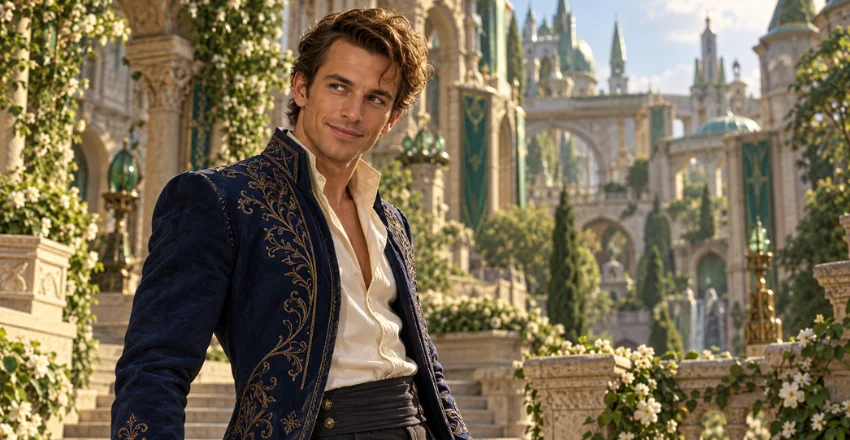
The prince begins with enough privilege to ignore most of Oz’s problems. That freedom allows him to treat life as entertainment. His development begins when detachment no longer feels harmless. He eventually chooses personal risk over social comfort. That decision places him closer to Elphaba’s values and further from the Wizard’s world. His transformation therefore works emotionally before it happens physically.
This progression also explains why the character has remained popular beyond the romantic triangle. He changes because his understanding of other people changes. The story gives him a clear movement from avoidance toward commitment.
For more personality and career coverage, readers can browse the latest features on the BlogsNBytes homepage. The site publishes profiles spanning entertainment, media, careers, technology, and other popular topics.
Musical Numbers Associated With the Prince
“Dancing Through Life” is his defining Act One number. The song introduces his philosophy: avoid unnecessary thought and enjoy the moment. Stephen Schwartz reportedly wrote several versions before the production settled on its final musical approach.
Later material gives his relationship with Elphaba a more emotional tone. Their story shifts from teasing exchanges toward sacrifice and shared danger. The music follows the same arc, moving from carefree energy to greater emotional weight.
This contrast helps explain why the role demands both charisma and dramatic range. The actor must make the early confidence believable without making later growth feel sudden. Theater-focused character guides consequently describe the part as a supporting role with major dramatic importance.
Frequently Asked Questions
Does Fiyero become the Scarecrow?
Yes, in the musical storyline and the film adaptation. Elphaba uses magic while trying to protect him after his capture. The resulting transformation allows him to survive in the form audiences recognize from Oz.
Who plays the prince in the Wicked movies?
Jonathan Bailey plays the role in both Universal films. He appears opposite Cynthia Erivo as Elphaba and Ariana Grande as Glinda. Bailey also receives a Scarecrow credit in the second film.
Does he end up with Glinda or Elphaba?
His deepest romantic relationship ultimately becomes the one he shares with Elphaba. His earlier connection with Glinda reflects their shared social world at Shiz. His changing values gradually pull him toward Elphaba instead.
Is the character the same in the book and musical?
No, several major details differ between Gregory Maguire’s novel and the stage adaptation. The book makes him married with children and gives him a much darker fate. The musical simplifies his background and connects him directly with the Scarecrow.
Why is “Dancing Through Life” important?
The number introduces his carefree philosophy and establishes his influence over the Shiz students. It also creates a baseline for his later growth. His later choices matter more because they challenge the detached attitude in that song.
Final Takeaway
The charming prince is much more than Wicked’s romantic third point. His journey links Shiz University, Elphaba’s rebellion, Glinda’s changing life, and the familiar Oz story. His final transformation turns an apparently carefree supporting character into one of the narrative’s most important bridges.
Jonathan Bailey’s film performance emphasizes that transition through humor, movement, and growing seriousness. The book, musical, and films do not tell identical versions of his life. Understanding those differences makes his role across the Wicked universe much easier to follow.