Clutter in the kitchen can make even simple tasks feel frustrating, especially when you scatter utensils, gadgets, and miscellaneous items across drawers. Mastering how to organize kitchen drawers can completely transform your cooking experience, making meal prep faster, cleaning easier, and your daily routine more efficient.
Ultimately, by implementing smart storage solutions, decluttering strategies, and practical everyday hacks, you can turn messy, chaotic drawers into tidy, functional spaces that not only save time but also make your kitchen a more enjoyable place to work and spend time.
This guide explores expert tips, smart storage solutions, space-saving techniques, and practical everyday hack to help you keep your kitchen drawers organized and functional.
| Topic | Overview / Key Points |
| Start With a Complete Drawer Cleanout | Create compartments for utensils and tools, prevent mixing, maximize drawer space, and maintain long-term organization. Adjustable dividers work best. |
| Categorize Kitchen Items | Create compartments for utensils and tools, prevent mixing, maximize drawer space, and maintain long-term organization. Adjustable dividers work best. |
| Use Drawer Dividers | Expandable organizers, knife trays, stackable containers, and drawer liner mats. Maximize storage and protect drawer surfaces. |
| Assign Each Drawer a Purpose | Dedicate drawers for utensils, cooking tools, gadgets, baking tools, etc. Purpose-driven drawers prevent clutter accumulation. |
| Smart Storage Solutions | Expandable organizers, knife trays, stackable containers, and drawer liner mats. Maximize storage and protect drawer surfaces. |
| Space-Saving Tricks | Store utensils vertically, nest measuring tools, use multi-purpose gadgets, deep organizers, and slim trays for narrow drawers. Ideal for small kitchens. |
| Everyday Kitchen Drawer Hacks | Return items to their place, avoid storing unnecessary gadgets, keep frequently used tools accessible, use labels, and reorganize periodically. Supports daily maintenance. |
| Organizing Special Items | Knife safety trays, stackable measuring cups, dedicated wraps/foils drawer. Keeps specialized tools safe and accessible. |
| Decluttering Strategies | Regularly review contents, remove unused gadgets, replace worn items, and avoid duplicates. Ensures drawers stay organized long-term. |
| Time-Saving Ideas | Keep cooking utensils near the stove, measuring tools near the baking ingredients, and frequently used items in top drawers. Reduces movement and improves efficiency. |
| Maintenance Tips | Clean drawers regularly, reorganize after large projects, replace broken organizers, and prevent overcrowding. Keeps the system functional and neat. |
How to Organize Kitchen Drawers?

Learning how to organize kitchen drawers is all about creating a system that makes cooking and meal prep easier while keeping your space neat and functional. Start by decluttering your drawers and removing items you no longer use. Group similar tools together to make everything easier to find.
Use drawer dividers, organizers, and smart storage solutions to keep utensils, gadgets, and baking tools in their designated spots. Assign each drawer a specific purpose so everything has a clear place. Maintain simple daily habits, like returning items after use and avoiding unnecessary clutter, to keep your kitchen organized long-term.
Why Organized Kitchen Drawers Matter
They help make cooking faster, reduce stress, and prevent unnecessary clutter from building up.
Key Benefits of Organized Drawers• Saves time by making items easier to find
• Maximizes the use of available kitchen space
Minimizes clutter while promoting a cleaner and more organized environment.
Start With a Complete Drawer Cleanout
Before organizing your kitchen drawers, begin with a full cleanout to set a solid foundation. Start by emptying each drawer completely so you can see everything at once. Then, group similar items together, such as utensils, tools, and gadgets, to simplify sorting.
Remove anything broken, rarely used, or duplicated, and consider donating items in good condition. Take a moment to thoroughly clean the inside of each drawer before returning anything. This process clears out clutter and creates a fresh, organized space, making it much easier to maintain an efficient kitchen setup.
Categorize Kitchen Items
Cooking Utensils
Cooking utensils such as spatulas, ladles, tongs, and serving spoons should be stored together in one drawer. Keeping these tools grouped allows easy access while cooking and prevents them from mixing with smaller items.
Eating Utensils
Forks, knives, spoons, and other eating utensils should be organized in a dedicated utensil drawer using dividers or trays. This arrangement keeps them neatly separated and easy to find during meal preparation or table setting.
Baking Tools

Baking tools like whisks, pastry brushes, dough cutters, and spatulas can be placed together in a separate drawer. Grouping baking items ensures they are readily available when needed and prevents them from getting lost among everyday cooking tools.
Measuring Cups and Spoons
Measuring cups and spoons should be stored in a designated section or drawer. As a result, keeping them together makes it easier to measure ingredients accurately while cooking or baking.
Food Storage Accessories
Items such as bag clips, small containers, food wrap cutters, and sealing tools should be grouped together. This helps maintain organization and prevents these small accessories from cluttering to other drawers.
Small Kitchen Gadgets
Small gadgets like peelers, graters, garlic presses, can openers, and bottle openers should have their own dedicated drawer section. Organizing these tools together ensures they remain easy to find and do not mix with larger utensils.
Use Drawer Dividers for Better Organization
Drawer dividers are one of the most effective tools for organizing kitchen drawers. They create separate compartments that keep items neatly arranged.
Benefits of Drawer Dividers
Stops utensils from getting mixed together
• Makes better use of space and keeps tools organized for long-term use
Assign Each Drawer a Specific Purpose
Utensil Drawer
A utensil drawer should be dedicated to everyday eating utensils such as forks, knives, and spoons. Using dividers can keep these items separated and easy to find during meal preparation or table setting.
Cooking Tools Drawer
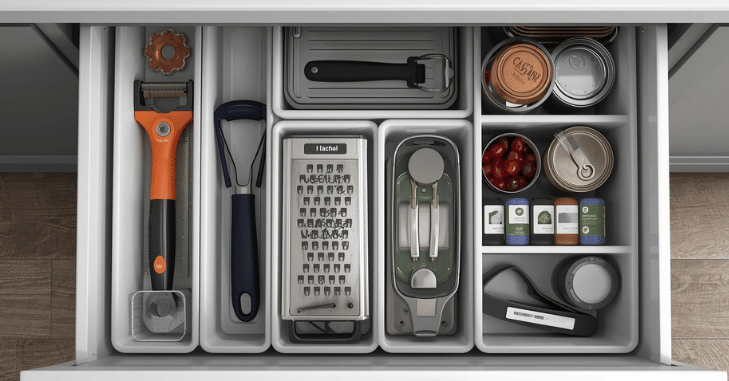
Cooking tools like spatulas, tongs, and ladles should be stored together in one drawer. Keeping these items grouped makes it easier to access them while cooking and prevents them from mixing with smaller utensils.
Gadget Drawer
Kitchen gadgets such as peelers, graters, and openers should have their own drawer section. Organizing these small tools together helps keep them easy to locate and prevents them from cluttering other drawers.
Baking Tools Drawer
Additionally, baking tools, including measuring cups, whisks, and pastry brushes, can be stored in a dedicated drawer. By grouping these items together, you ensure they are readily available whenever you need them.
Smart Storage Solutions for Kitchen Drawers
Modern storage solutions can significantly improve drawer functionality and make it easier to maintain an organized kitchen. When learning how to organize kitchen drawers, using practical storage tools can help maximize available space and reduce clutter.
Expandable utensil organizers keep forks, spoons, and knives neatly separated, while adjustable drawer dividers create flexible compartments for different tools. Knife storage trays provide a safe way to store sharp blades inside drawers, and stackable containers help organize smaller items efficiently.
Space-Saving Tricks for Small Kitchens
Space-Saving Drawer Ideas
Store utensils vertically instead of flat
• Use nested measuring cups and spoons
• Choose multi-purpose kitchen tools
• Install deep drawer organizers
• Use slim trays for narrow drawers
Everyday Kitchen Drawer Organization Hacks
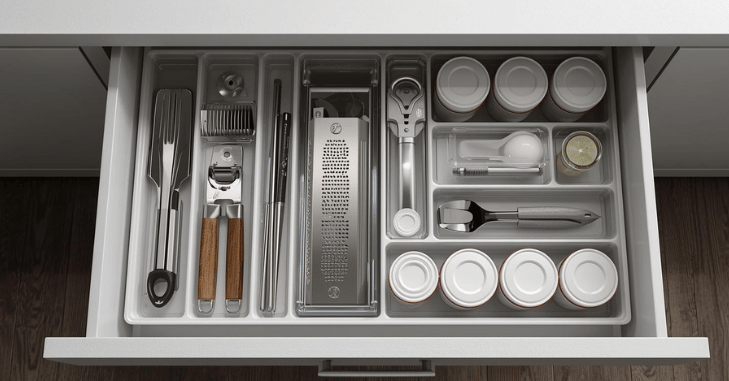
Maintaining organized kitchen drawers does not require complicated systems. Simple daily habits can make a big difference in keeping your kitchen neat and functional.
Return Items to Their Proper Place
One of the simplest ways to keep kitchen drawers organized is by returning items to their designated place after using them. This small habit prevents tools and utensils from piling up in the wrong drawers and keeps everything easy to find.
Avoid Storing Unnecessary Gadgets
Many kitchens accumulate gadgets that are rarely used. Avoid storing unnecessary tools in your drawers and keep only the items you regularly use. This helps reduce clutter and frees up valuable drawer space.
Keep Frequently Used Tools Within Reach
Store commonly used utensils and cooking tools in drawers that are easy to access. Placing frequently used items near the stove or preparation area improves efficiency and makes cooking more convenient.
Use Labels for Shared Kitchens
In households where multiple people use the kitchen, labeling drawer sections can help maintain organization. Labels guide everyone to return items to the correct place, keeping drawers tidy and easy to manage.
Reorganize Drawers Regularly
Taking a few minutes every few months to reorganize your drawers can prevent clutter from building up again. Regular checks allow you to remove unused items and adjust the layout as your kitchen needs change.
Best Drawer Layout for Efficiency
Efficient drawer placement can make cooking much easier. Organize drawers based on how you use your kitchen.
Ideal Kitchen Drawer Layout
Top drawers are ideal for storing eating utensils and small everyday tools for quick access.
Middle drawers work best for organizing cooking utensils and frequently used kitchen gadgets.
Lower drawers should be reserved for pots, lids, and heavier equipment to ensure stability and easy handling.
Organizing Special Kitchen Items
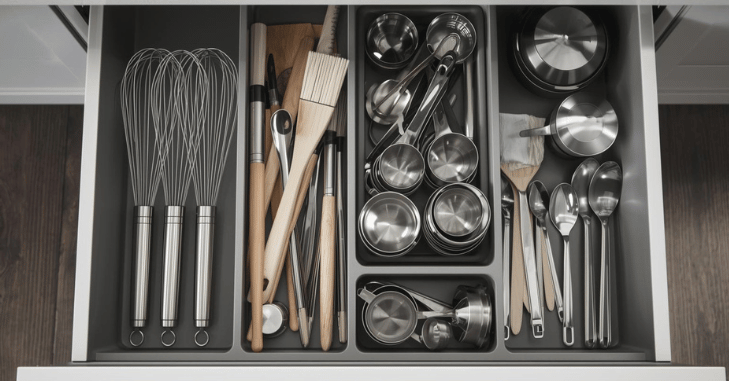
Certain kitchen tools require special storage solutions to remain safe and accessible.
- Knife Storage• Use knife drawer trays to prevent accidents.
• Always store blades facing downward for added safety.
Measuring Tools• Use stackable measuring cups
• Store spoons in a small divider section
• Keep baking tools together
Wraps and Foils
• Store aluminum foil, plastic wrap, and parchment paper in a dedicated drawer
• Use drawer dispensers for easier access
These solutions protect your tools while keeping your kitchen organized.
Decluttering Strategies for Long-Term Organization
Even well-organized kitchens can become cluttered over time, so regular decluttering is important to maintain order and efficiency. Reviewing the contents of your kitchen drawers every few months helps you identify items you no longer use or need.
Remove Unused Gadgets
Eliminate kitchen tools and gadgets that are rarely or never used. This frees up drawer space and prevents clutter from accumulating over time.
Replace Worn-Out or Damaged Tools
Inspect your drawers for broken, worn, or damaged tools. Replacing them ensures your kitchen remains safe, functional, and efficient.
Avoid Unnecessary Duplicates
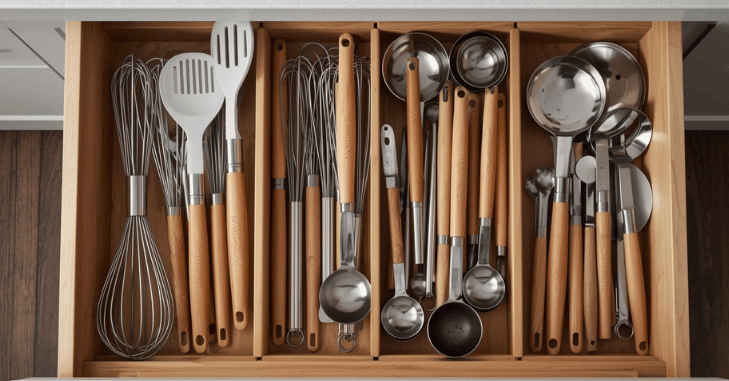
Purchasing duplicates of items you already have can lead to overcrowded drawers. Only keep what you truly need to maintain an organized and functional kitchen.
Maintain Consistent Decluttering
Even well-organized kitchens can become cluttered over time, so regular decluttering is important to maintain order and efficiency. Reviewing the contents of your kitchen drawers every few months helps you identify items you no longer use or need.
Remove Unused Gadgets
Eliminate kitchen tools and gadgets that are rarely or never used. This frees up drawer space and prevents clutter from accumulating over time.
Replace Worn-Out or Damaged Tools
Inspect your drawers for tools that are broken, worn, or damaged. Replacing them ensures your kitchen remains safe, functional, and efficient.
Avoid Unnecessary Duplicates
Purchasing duplicates of items you already have can lead to overcrowded drawers. Only keep what you truly need to maintain an organized and functional kitchen.
Maintain Consistent Decluttering
Consistent decluttering, done every few months, helps keep your kitchen drawers tidy and prevents clutter from building up again.
Conclusion
Learning how to organize kitchen drawers is a simple yet powerful way to improve the functionality and efficiency of your kitchen. By starting with a thorough cleanout, categorizing your kitchen items, using drawer dividers, and applying smart storage solutions, you can create a well-structured and clutter-free space.
Space-saving techniques, everyday organization habits, and regular decluttering play an important role in maintaining order over time. Consistently applying these strategies for organizing kitchen drawers makes your kitchen easier to manage, makes cooking more enjoyable, and helps save valuable time during daily tasks.
Want to know about 100 Amp Sub Panel Wire Size Explained: Safe Options, NEC Code Requirements, Voltage Drop Considerations, and Installation Best Practices Check out our Home Improvement category.
FAQs
Pots and pans are among the items that can be kept in drawers, which can improve accessibility and organization.
North American designers are adopting sleek, handle-free drawers and doors that produce continuous visual planes in kitchens, bathrooms, and office spaces, greatly influenced by European ideas.
Choosing the incorrect size, utilising fragile materials, and packing compartments too full are common problems associated with drawer dividers.