Tony Hawk’s net worth estimates commonly place his fortune around $140 million in 2026. That figure remains an estimate because he doesn’t publicly disclose his private assets and liabilities. His wealth comes from skateboarding, video game royalties, business ownership, endorsements, licensing, media work, and investments.
Hawk’s financial story is unusual because competition winnings represent only part of his career earnings. He turned his reputation into businesses and licensing opportunities that lasted decades. The Tony Hawk’s Pro Skater franchise became especially important to that transformation.
Quick answer: Tony Hawk’s net worth is widely estimated at about $140 million in 2026. The exact figure isn’t publicly verified. He built his fortune through professional skateboarding, Birdhouse Skateboards, endorsements, licensing, media projects, investments, and his highly successful video game franchise. You might also like Steven Spielberg Net Worth.
Tony Hawk at a Glance
| Category | Details |
| Full name | Anthony Frank Hawk |
| Date of birth | May 12, 1968 |
| Age in 2026 | 58 |
| Birthplace | San Diego, California |
| Nationality | American |
| Profession | Professional skateboarder, entrepreneur |
| Known as | “Birdman” |
| Turned professional | 1982 |
| Major business | Birdhouse Skateboards |
| Famous video game series | Tony Hawk’s Pro Skater |
| Historic achievement | First skateboarder to land a 900 at the X Games |
| X Games medals | 16 |
| Estimated net worth | Around $140 million |
| Main wealth sources | Licensing, businesses, endorsements, video games, skateboarding |
The $140 million figure is an outside estimate, not audited financial information. Celebrity Net Worth currently publishes that estimate, while another recent model estimates about $110 million. That model gives a broad $65 million to $170 million range because private holdings remain difficult to value.
Key Takeaways
- Hawk became financially successful before skateboarding entered the American mainstream.
- His early income came from contests, sponsorships, and skateboard royalties.
- Birdhouse gave him an ownership stake in the skateboarding industry.
- The Pro Skater games created a major licensing and royalty opportunity.
- Endorsements, media projects, speaking, and investments broadened his income.
- Public net-worth figures remain estimates because his complete finances aren’t disclosed.
What Is Tony Hawk’s Net Worth in 2026?
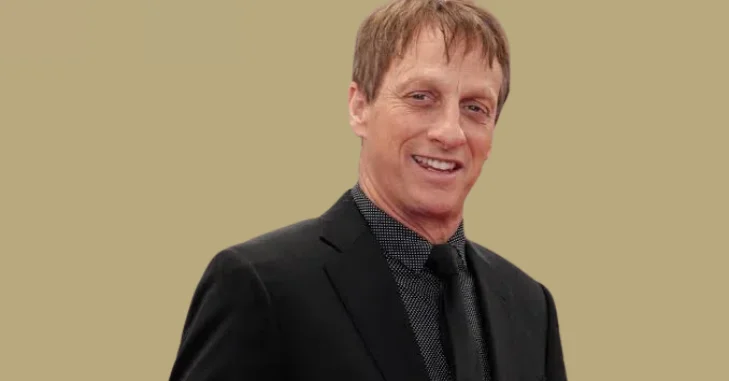
A reasonable headline estimate of Tony Hawk’s net worth is about $140 million, based on widely published third-party calculations. Wealthy Gorilla also listed $140 million in its September 2026 update. Celebrity Net Worth currently reports the same amount.
Still, readers should distinguish an estimated fortune from a confirmed financial statement. Private companies don’t disclose every ownership percentage, debt obligation, investment, or asset value. For that reason, no outside publisher can calculate his personal fortune with complete precision.
A September 2026 Grizzly Bulls analysis illustrates that uncertainty clearly. It modeled a $110 million base estimate and a range between $65 million and $170 million. Its confidence rating was low because current private-business valuations and ownership percentages remain unclear.
How Did Tony Hawk Make His Money?
Hawk built his wealth through several income streams rather than one giant payday. Competitive skating created his reputation, while licensing and ownership expanded its commercial value. His career shows how an athlete can turn recognition into long-term intellectual property and business income.
The biggest financial drivers include:
- Professional skateboarding and competition earnings.
- Sponsorships and endorsement agreements.
- Birdhouse Skateboards.
- Tony Hawk’s Pro Skater licensing and royalties.
- Hawk-branded products and merchandise.
- Television, film, and media appearances.
- Speaking engagements.
- Business investments.
That mix separates his financial story from athletes who depend primarily on salaries or prize money. Readers interested in another athlete’s post-playing career can also explore Blogsnbytes’ profile of Will Proctor’s net worth and career transition. It provides another example of sports recognition leading into a different professional career.
Skateboarding Earnings Started the Foundation
Hawk became a professional skateboarder at 14. By his late teens, skateboarding was already providing substantial income. His official biography says his annual earnings exceeded those of his teachers while he was still a high-school senior.
Those early earnings came largely from sponsorships and royalties connected with skateboard products. He was successful enough to buy a home before graduating high school. Yet his early success didn’t guarantee permanent financial security.
Skateboarding’s popularity declined sharply during the early 1990s, and Hawk’s income fell with it. His official biography describes a period when money became tight, and his future looked uncertain. That downturn eventually pushed him toward business ownership.
Birdhouse Skateboards Became a Long-Term Business
Hawk and former professional skater Per Welinder started Birdhouse during the difficult early-1990s period. The business struggled at first because skateboarding itself was experiencing a downturn. Hawk even used equity from his home while building the company.
The decision became more valuable as skateboarding regained popularity during the decade. Birdhouse developed into a recognizable skateboard brand with professional riders and global visibility. The company also gave its famous co-founder something competition alone couldn’t provide: business ownership.
Ownership matters when examining an athlete’s wealth because it can create income beyond active competition. Product sales, licensing opportunities, and brand equity can continue after retirement. Birdhouse therefore became an important piece of Hawk’s broader business career.
Tony Hawk’s Pro Skater Changed His Financial Story
The launch of Tony Hawk’s Pro Skater in 1999 created one of his most important commercial relationships. Hawk worked with Activision on the game bearing his name. The series then grew far beyond the original release.
His official website says the franchise has generated nearly $2 billion in sales. That figure reflects game sales, not what Hawk personally received. Still, it shows the enormous commercial scale of the intellectual property carrying his name.
The franchise also remained commercially active long after his competitive peak. Tony Hawk’s Pro Skater 3 + 4 arrived in 2025, extending the brand into another gaming generation. That longevity helps explain why video games remain central to discussions of his fortune.
Endorsements and Licensing Expanded His Income
Mainstream recognition opened another major income channel through endorsements. Birdhouse notes that its famous co-founder became a highly sought-after product endorser. His image could reach audiences well beyond dedicated skateboard fans.
Licensing also allowed his name to appear across products without requiring competition appearances. His official biography identifies Hawk Clothing and a signature sporting-goods and toy line among his business interests. Those ventures helped turn a professional athlete into a recognizable consumer brand.
This model also reduced dependence on prize money. A competition career eventually ends, but intellectual property can keep producing commercial opportunities. Hawk’s recognizable name became an asset that could work across games, apparel, equipment, entertainment, and advertising.
The 900 Increased His Cultural Value
In 1999, Hawk landed the first documented 900 at the X Games in San Francisco. The trick requires two and a half rotations before landing. X Games describes it as one of the sport’s most memorable moments.
The achievement mattered financially because cultural visibility can increase an athlete’s commercial value. It arrived during the same period as the first Pro Skater game. Skateboarding, television exposure, and gaming were suddenly reinforcing the same personal brand.
The board used for that historic trick later demonstrated its extraordinary cultural value. In 2025, it sold at auction for $1.15 million, according to the Associated Press. A portion of the auction proceeds supported The Skatepark Project.
Business, Media, and Investments Added More Revenue
Hawk’s commercial interests have extended beyond boards and video games. Sports Business Journal previously identified businesses and projects including 900 Films, Ride Channel, Hawk Clothing, and Demolition Radio. These ventures expanded his involvement in entertainment and media.
He has also appeared in television programs, films, documentaries, and other entertainment projects. Public speaking creates another potential income stream for a famous athlete and entrepreneur. Forbes reported that he has also invested in various businesses.
These activities make any precise wealth calculation more difficult. Private investments can change in value, and their terms usually aren’t public. The same uncertainty applies to ownership stakes in privately held companies.
Why Net-Worth Estimates Differ
Net worth isn’t the same thing as lifetime earnings or company revenue. A person might generate hundreds of millions in commercial sales without personally owning that money. Taxes, expenses, partners, royalty agreements, debt, investments, and ownership percentages all affect the final calculation.
This distinction matters especially for the Pro Skater franchise. Nearly $2 billion in game sales doesn’t mean its namesake received $2 billion. Publishers, developers, retailers, platforms, employees, and other parties participate in the economics.
Different publishers also use different valuation methods. One may emphasize historic income, while another models current private holdings. Readers should therefore view the $140 million figure as a useful estimate rather than a confirmed account balance.
From Financial Trouble to a Lasting Business Career
One of the most interesting parts of Hawk’s financial history is that success wasn’t uninterrupted. Skateboarding’s early-1990s decline sharply reduced his income. Birdhouse also struggled at first, forcing its founders to cut expenses.
His later fortune grew because he remained connected to skateboarding when its popularity returned. Business ownership gave him exposure to that recovery. Video games then connected his identity with millions of people who might never visit a skatepark.
That combination created a durable career after his competitive years. The lesson isn’t that one deal made him wealthy. Instead, several related businesses turned sporting credibility into income across multiple industries.
Philanthropy and The Skatepark Project
Hawk has also directed significant attention toward skatepark development. His foundation, now called The Skatepark Project, supports public skateparks and community projects. His official biography says it has awarded more than $13 million in grants to over 660 U.S. skatepark projects.
That charitable activity should not be confused with his personal wealth. Donations and nonprofit grants aren’t personal income. They do show how his career has supported projects tied closely to the sport that built his public profile.
The foundation also adds another dimension to his legacy beyond business. His influence now includes competitive skating, gaming, entrepreneurship, and community skate infrastructure. That reach helps explain why his name remains commercially recognizable decades after he turned professional.
Is Tony Hawk a Billionaire?
No reliable public evidence shows that Hawk is personally a billionaire. Current published estimates place his wealth far below the $1 billion threshold. Even the upper end of recent modeled estimates remains well short of that level.
Confusion can arise because his video game franchise has generated billions in the billions. Franchise revenue isn’t the same as an individual’s personal net worth. This distinction matters when interpreting celebrity wealth figures.
His estimated fortune remains exceptional in skateboarding. More importantly, iit comes from sourcesfar beyond contest winnings. Business ownership and licensing became central to the financial story.
Final Thoughts
Hawk’s estimated $140 million fortune reflects far more than decades spent riding a skateboard. He built businesses, licensed intellectual property, secured endorsements, entered media, and maintained a globally recognizable brand. The result is an athlete-business story that continued long after his competitive prime.
The precise dollar figure can change because his private holdings aren’t fully public. The more reliable conclusion concerns where the money came from: skateboarding created the platform, while ownership and licensing multiplied its value. For readers researching celebrity and athlete finances, Blogsnbytes can continue exploring how careers become long-term businesses.
FAQs
What is Tony Hawk net worth in 2026?
Widely cited estimates put his fortune at about $140 million in 2026. Other recent valuation models produce lower central estimates and broad ranges. Since his full assets and liabilities are private, treat none as an audited figure.
How did Tony Hawk become rich?
He earned money first through professional skateboarding, sponsorships, and product royalties. Birdhouse, video game licensing, endorsements, media work, and investments later expanded his income. Those sources allowed his commercial career to continue beyond competition.
How much money did the Pro Skater games make?
His official website says the game series has generated nearly $2 billion in sales. That amount represents franchise sales rather than his personal earnings. His exact lifetime royalties from the games aren’t publicly disclosed.
Does Tony Hawk own Birdhouse?
He co-founded Birdhouse with Per Welinder during the early 1990s. The brand remains closely associated with him and identifies him as central to its team and history. The sources reviewed don’t fully disclose current private ownership percentages.
When did Tony Hawk land the 900?
He landed the historic 900 at the 1999 X Games in San Francisco. The trick involves completing two and a half rotations in the air. The achievement became a defining moment of his career.