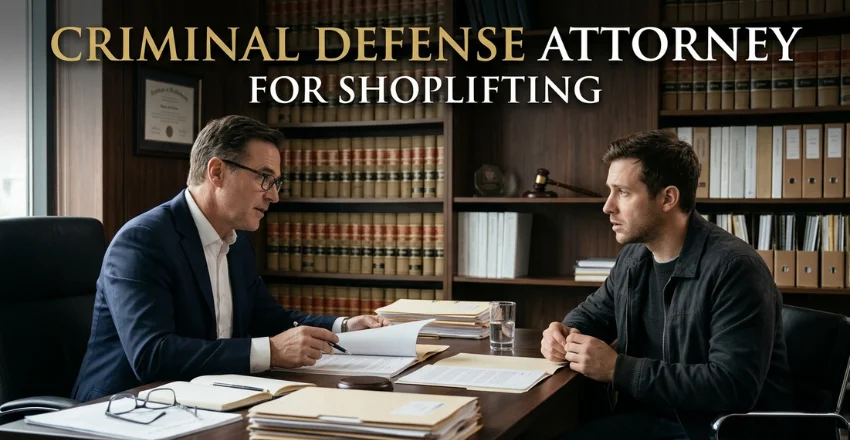
A shoplifting accusation can create criminal, financial, and personal problems faster than many people expect. State laws determine the charge, possible penalties, and available alternatives. Getting legal advice early can help you understand what the prosecution must prove.
Direct answer: A criminal defense attorney for shoplifting reviews the evidence, identifies weaknesses, explains possible penalties, and negotiates with prosecutors. The lawyer can also explore diversion options, challenge improper searches, address disputed intent, and prepare a defense if the case proceeds to trial.
| Key issue | What to know |
|---|---|
| Shoplifting laws | Rules and offense names differ by state |
| Possible charge | Cases may involve an infraction, misdemeanor, or felony |
| Important evidence | Video, receipts, witness accounts, statements, and store records |
| Intent | Prosecutors commonly must prove a required criminal mental state |
| First offense | Diversion or reduced outcomes may exist in some jurisdictions |
| Attorney fees | Flat fees, hourly billing, and retainers are common |
| Public defender | Eligibility generally depends on finances and the case |
| Best first step | Review the charge with a lawyer licensed in your state |
What Counts as Shoplifting in the United States?
Shoplifting usually involves taking merchandise without paying or intentionally paying less than the required price. Other conduct may also qualify under state law. Examples can include concealment, price-tag switching, under-ringing, or merchandise manipulation.
The Cornell Legal Information Institute’s overview of shoplifting law explains that states do not treat the offense the same way. Some prosecute shoplifting under general larceny laws. Others create separate retail-theft or shoplifting offenses.
That difference matters because no single nationwide shoplifting penalty exists. Merchandise value, prior convictions, and local statutes can change the charge. A result described online for one state may not apply elsewhere.
Why Intent Can Become a Major Issue
Criminal cases often involve both prohibited conduct and a required mental state. Cornell’s explanation of mens rea describes criminal intent as the mental state required for conviction. The required standard can differ by offense and jurisdiction.
This issue can matter in self-checkout cases. A missed scan does not automatically establish criminal intent in every situation. The surrounding facts and applicable statute determine what prosecutors must prove.
A lawyer may review receipts, payment records, surveillance footage, and witness statements. The attorney can compare that evidence with your account. That review may reveal facts that change how the allegation should be evaluated.
What a Criminal Defense Attorney for Shoplifting Can Do
A lawyer first determines the exact offense charged under the applicable state statute. The attorney then evaluates the evidence supporting each required element. That process can expose factual, procedural, or constitutional issues.
Video evidence may appear convincing but still require careful review. Timing, visibility, camera angles, and identification can affect what footage proves. Witness descriptions and loss-prevention reports may also contain inconsistencies.
BlogsNBytes explains this broader process in its criminal defense strategy guide. Defense work commonly includes evidence analysis, motions, negotiations, and trial preparation. The approach should reflect the facts, not a generic defense theory.
Possible Defense Issues in a Shoplifting Case

A lack of criminal intent can matter when merchandise leaves a store due to mistake or confusion. The defense depends on the governing statute and evidence. Simply saying the incident was accidental does not automatically resolve the charge.
Identification can also become disputed when surveillance footage is unclear. Witness memory may create another evidentiary issue. An attorney can compare statements, video, timelines, and other records for conflicts.
Searches, seizures, questioning, and detention can raise separate legal questions. The relevant rules depend on who performed each action. Store employees and police officers do not always follow the same legal standards.
Legal publishers commonly list disputed intent, identification, and certain search issues among possible defense areas. Negotiations may also become part of how a case is resolved.
What Happens After a Shoplifting Charge?
The procedure depends on the state and the seriousness of the allegation. A defendant may receive a citation, summons, or arrest paperwork. The first court appearance may include information about the charge and plea process.
Afterward, defense counsel may obtain discovery from the prosecution. Discovery can include police reports, store reports, recordings, photographs, and witness information. The lawyer then evaluates possible motions, negotiations, or trial preparation.
Some eligible defendants may qualify for diversion or alternative dispositions. Availability depends heavily on local law, prior history, and case facts. Completion may sometimes lead to dismissal, but no outcome should be assumed.
Can a First Shoplifting Charge Be Dismissed?
Dismissal is possible in some cases, but it is never guaranteed. Weak evidence, missing legal elements, or successful motions can affect a prosecutor’s decision. Certain jurisdictions also provide diversion programs for eligible defendants.
A prosecutor may instead offer a reduced charge or negotiated disposition. The consequences of accepting an offer should be reviewed carefully. A quick plea can create effects beyond the immediate fine or court date.
Employment, licensing, housing, immigration, and background checks can sometimes become relevant. The exact consequences depend on the person and jurisdiction. That makes individualized legal advice more useful than relying on generalized online predictions.
Will You Go to Jail for Shoplifting?
Jail exposure depends on state law, merchandise value, prior offenses, and other circumstances. Some lower-level first offenses may carry less severe sentencing risks. More serious or repeated accusations can create much greater exposure.
States also use different monetary thresholds and offense classifications. An amount treated as a misdemeanor in one jurisdiction may be treated differently elsewhere. Current local statutes must therefore be checked before predicting penalties.
Do not assume that a small purchase price makes the case harmless. Even lower-level charges can create court requirements and a criminal record. A local lawyer can explain the realistic sentencing range for the filed charge.
How Much Does a Shoplifting Defense Lawyer Cost?
There is no standard nationwide fee for defending a shoplifting case. Lawyers may charge hourly rates, flat fees, or an advance retainer. Case complexity, location, experience, and trial preparation can change the total.
As a rough guide only, a lower-level shoplifting case is often quoted as a flat fee ranging from several hundred dollars to a few thousand dollars, while felony-level charges generally cost more. Hourly billing and retainers are also common. Flat fees may cover only certain case stages, so confirm whether trial work requires another fee.
Bar associations generally encourage clients to understand how legal fees are calculated before hiring counsel. Written fee terms can prevent misunderstandings later. These ranges are estimates, not quotes, and they vary by state and county.
Ask what the quoted amount includes before signing an agreement. Confirm whether investigators, experts, trial preparation, or appeals cost extra. Also ask whether payment plans are available.
Civil Demand Letters, Plea Options, and Record Sealing
Separate from the criminal case, a store or its attorney may send a civil demand letter asking for money. Many states allow retailers to seek civil recovery from people accused of shoplifting, and the rules and amounts vary by state. A demand letter is not a court order, and paying it does not necessarily end or affect the criminal case. Show the letter to your lawyer before responding.
Plea options can include a reduced charge, a deferred or diversion agreement, or a negotiated sentence. Each option can affect your record, so a lawyer should explain what the plea means for employment, licensing, and immigration before you accept it.
After a case ends, some states allow record sealing or expungement for eligible shoplifting convictions, dismissals, or completed diversion programs. Eligibility rules, waiting periods, and fees vary by state, so ask your attorney whether this is possible in your situation and when you could apply.
This article is general information, not legal advice. Speak with a lawyer licensed in your state about your own case.
Private Lawyer or Public Defender?
People who cannot afford private representation may qualify for appointed counsel. Eligibility rules vary by jurisdiction and financial circumstances. A judge or local defender system usually determines qualification.
A private lawyer may offer more choice about whom you hire. That does not mean appointed counsel is automatically less capable. Both forms of representation can provide constitutionally important criminal defense services.
Representing yourself creates a different set of risks. Criminal procedure, evidence rules, deadlines, and negotiations can quickly become difficult. BlogsNBytes’ guide to appearing pro se in court explains those responsibilities in more detail.
How to Choose the Right Attorney
Look for a lawyer licensed in the state where the case is pending. Ask about recent experience with theft, retail-theft, or shoplifting matters. Local courtroom experience can also help the attorney understand procedures and prosecution practices.
Ask how the lawyer would evaluate the evidence before discussing outcomes. Be cautious if someone guarantees dismissal or acquittal before reviewing the case. Bar associations warn consumers about lawyers who assure victory.
Discuss communication before hiring anyone. Find out who will answer questions and how quickly the office usually responds. You should also understand whether another lawyer may handle court appearances.
Questions Worth Asking During a Consultation
A consultation should clarify both legal strategy and financial expectations. Ask what evidence the lawyer wants to review first. Also ask which outcomes appear realistically available under local law.
Discuss whether diversion exists in the relevant county or state. Ask how prior charges or convictions could affect eligibility. The attorney should explain uncertainty rather than promise a specific result.
Fee questions deserve the same attention. Ask whether the arrangement is flat, hourly, or retainer-based. Request written terms showing what services the quoted fee covers.
What to Do Before Meeting the Attorney
Keep every document connected with the incident. These records may include citations, summonses, receipts, release paperwork, and court notices. Give your lawyer copies rather than altering the originals.
Write down your recollection while the events remain fresh. Include locations, times, conversations, purchases, and people present. Do not contact witnesses to influence what they might say.
Avoid posting about the allegation on social media. Public comments can create evidence that did not previously exist. Discuss case details privately with your attorney instead.
Why Acting Early Can Matter
Evidence can become harder to obtain as time passes. Surveillance systems may overwrite recordings according to their retention schedules. Witness memories can also become less precise.
Early counsel can identify what should be preserved. A lawyer can also advise you before important court appearances or communications with the prosecutor. That preparation may prevent avoidable decisions.
BlogsNBytes maintains a broader U.S. law section covering court procedures and legal rights. Those materials can provide general background. Your own charge still requires advice based on your state and facts.
When Should You Contact a Lawyer?
Consider contacting counsel after an arrest, citation, summons, or formal shoplifting accusation. You do not need to wait until a trial date approaches. Earlier review gives the attorney more time to examine available options.
A criminal defense attorney for shoplifting can explain the filed charge and local sentencing rules. Counsel can also identify defenses, diversion possibilities, and negotiation issues. Those conclusions should come from evidence, not assumptions.
Next step: Gather your court documents and speak with a licensed criminal defense lawyer in the state handling the case. Ask for a case-specific assessment and written fee terms. Don’t rely on another state’s shoplifting rules to predict your outcome.
Frequently Asked Questions
Do I need a criminal defense attorney for shoplifting if it is my first offense?
Legal representation can still help with a first offense. A lawyer can review the evidence and determine whether diversion or another resolution is available. First-offense treatment varies widely by state and local court.
Can a shoplifting lawyer get the charges dropped?
A lawyer can seek dismissal when the facts and law support it. Possible issues can involve insufficient evidence, disputed intent, or successful pretrial challenges. No responsible attorney can guarantee that prosecutors or judges will dismiss a case.
Does shoplifting always mean taking an item out of a store?
Not necessarily. Cornell’s overview notes that shoplifting can include concealment or manipulation intended to avoid paying the proper price. State statutes determine the exact conduct covered.
Can self-checkout mistakes lead to shoplifting allegations?
Yes, self-checkout incidents can result in accusations when a store believes merchandise was intentionally under-scanned. The key legal issue may include whether the required intent can be proven. Evidence and state law determine how strong that allegation is.
Is a shoplifting conviction permanent?
Record consequences vary by state and case outcome. Some jurisdictions allow sealing or expungement after specified requirements are met. A local attorney can explain whether those remedies exist for your circumstances.
Are shoplifting laws the same across every state?
No. States define, classify, and punish theft-related conduct differently. Always check the law governing the jurisdiction where the alleged offense occurred.