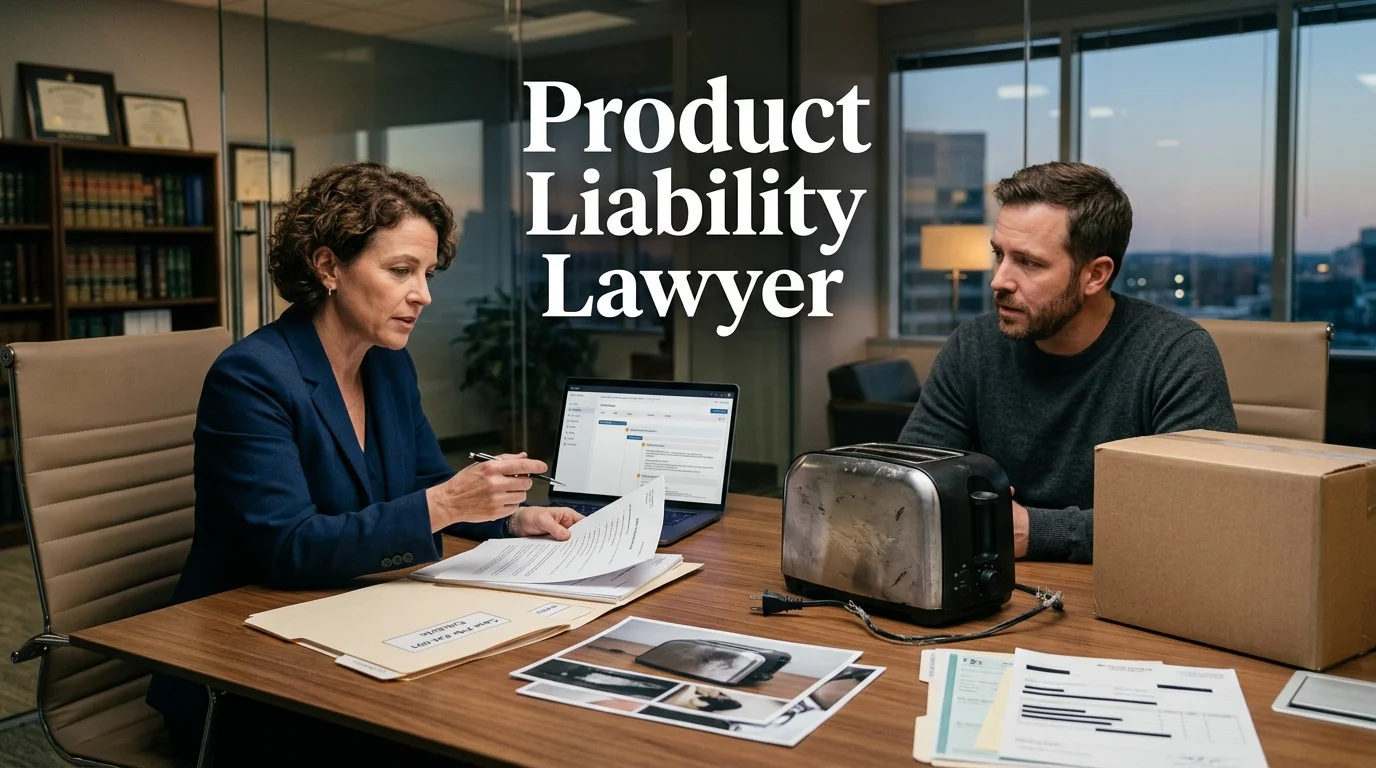
If a product seriously injures you and a defect may be involved, a product liability lawyer can investigate what failed and who may be responsible. An attorney can also help preserve technical evidence, assess your losses, and explain the legal options available in the state where the claim arose. Elsewhere on the site: What does homicide mean.
| What matters | What to know |
| Common defect types | Design, manufacturing, and warning or instruction defects |
| Evidence to keep | Product, packaging, instructions, receipts, photos, videos, and medical records |
| Attorney fees | Contingency fees are common; about 30%–40% is typical, but agreements vary |
| Other costs | Experts, filing fees, depositions, records, and other case expenses may be separate |
| Filing deadline | It depends on state law and the facts of the case, so prompt legal advice matters |
| Safety check | Search current recalls and report unsafe consumer products when appropriate |
Short answer: Contact a specialist when a product causes a serious injury and a defect, inadequate warning, or manufacturing problem may be involved. A lawyer can preserve evidence, identify possible defendants, arrange expert reviews, calculate losses, deal with insurers, and file a claim before the deadline that applies in your state.
When Should You Contact a Product Liability Lawyer?

Not every broken product leads to a valid legal claim. A consultation may be worthwhile when an apparent product problem causes a significant physical injury, financial loss, or both.
Consider speaking with an attorney when:
- a product breaks, overheats, explodes, collapses, or malfunctions during normal use;
- instructions or warnings fail to disclose a danger you encounter;
- you need medical treatment after the incident;
- you learn that similar products have been recalled or linked to comparable incidents;
- the manufacturer, seller, or insurer asks you to return the product quickly; or
- the injury causes medical bills, missed work, or lasting limitations.
A recall can provide useful evidence, but it does not automatically prove an individual claim. The product, defect, injury, causation, and applicable state law still matter.
What Makes a Defective-Product Case Different?
U.S. law generally recognizes design, manufacturing, and marketing defects involving inadequate warnings or instructions. The exact legal standards vary by jurisdiction.
A design defect concerns a problem with how the product was designed. A manufacturing defect occurs when a particular unit differs from its intended design. A warning claim generally focuses on missing or inadequate instructions or warnings about a non-obvious danger.
Claims may involve strict liability, negligence, warranty theories, or state-specific statutes. For that reason, rules from another state should not be treated as a reliable filing guide for your own case.
What Does the Attorney Do After You Call?

The first step is usually gathering the facts. An attorney needs to understand what the product was, how you used it, what happened, and what injuries resulted.
A product liability case may also require a technical investigation. Engineers, medical professionals, product safety specialists, or other experts may be important when the cause of a failure is disputed.
The investigation may also identify companies within the supply chain. Depending on the product and governing law, responsibility may involve a manufacturer, component maker, distributor, seller, or another business connected to the product.
Save This Evidence Before the Product Changes Hands
One of the easiest mistakes to make is returning, repairing, cleaning, or throwing away the product before anyone investigates it.
Preserve the item itself, along with its packaging, instructions, proof of purchase, photographs, medical documents, and other relevant records.
Create a simple case file containing:
- The product in its post-incident condition. Store it safely and avoid making unnecessary changes.
- Packaging and instructions. Keep manuals, warning labels, inserts, serial numbers, and model information.
- Purchase records. Save receipts, order confirmations, warranties, and payment records.
- Incident evidence. Keep photographs or videos of the product, the location, the damage, and the injuries.
- Medical and income records. Retain bills, treatment records, work notes, and proof of lost income.
This file can make an initial consultation much more useful.
How Much Does Hiring an Attorney Cost?
Many plaintiff-side product liability attorneys use contingency-fee agreements. Instead of charging an attorney fee upfront, the firm receives an agreed-upon percentage if it obtains a settlement or judgment.
Contingency fees in product liability cases often fall within a percentage range of the total recovery, although the exact percentage varies by firm, case, and stage of litigation.
Case expenses are a separate issue. Expert witnesses, court reporters, filing fees, medical records, and other litigation costs can affect the final amount you receive. Ask whether these expenses are deducted before or after the attorney’s percentage is calculated.
Many firms also offer free initial consultations, but this practice is not universal. Confirm the consultation fee before sending documents or signing an agreement.
7 Questions to Ask Before Hiring an Attorney
A polished website tells you less than a focused consultation. Use the first call to determine whether the firm has the experience and resources your case may require.
- How many cases involving this type of product have you handled? Experience with similar technical issues may matter more than broad personal injury experience.
- Who will manage my case day-to-day? Find out whether you will work with the attorney you meet or another member of the legal team.
- Have you taken a defective-product case to trial? Settlement experience matters, but so does the ability to prepare a case for litigation.
- Which experts might this case require? Ask how the firm decides whether engineering, medical, or safety specialists are necessary.
- How are attorney fees and case expenses calculated? Get the percentage and expense terms in writing.
- How will you update me? Agree on who will communicate with you, how often you will receive updates, and which communication method the firm will use.
- What problems do you see in my case? A useful consultation should address both weaknesses and strengths.
Be cautious of guarantees. No attorney can reliably promise a specific result before fully investigating the facts and applicable law.
Check Deadlines and Recalls Early
There is no single nationwide filing deadline that safely applies to every defective-product injury. Limitation periods depend on state law, the type of claim, and the facts of the case.
That makes early legal advice more useful than relying on a deadline quoted for another state.
You should also check whether the product has been subject to a safety recall. A recall search may show whether a known safety problem already exists.
A recall can provide useful background information, but it should not replace legal advice or an expert inspection.
Do You Have a Potential Claim?

A useful first screening question is whether there is a connection between a suspected defect and a real injury or financial loss.
A product liability claim generally requires evidence showing that the product was defective and that the defect caused or contributed to the injury. The exact legal requirements depend on the applicable state law.
An attorney will also examine how the product was used, whether it was altered after sale, what warnings accompanied it, and what evidence remains available.
If the incident happened at work, separate workers’ compensation issues may also arise.
Your Next Step
If you were seriously injured by a potentially defective product, first preserve the item and all related records. Write down the model number, serial number, purchase information, and details of what happened while the information is still fresh.
Then schedule a consultation with a licensed product liability lawyer in your state. Bring your evidence file and the seven questions above so you can compare attorneys based on experience, costs, resources, and communication rather than advertising alone.
Frequently Asked Questions
The attorney investigates a suspected defective product, preserves evidence, identifies potentially responsible parties, works with experts when needed, assesses damages, negotiates with insurers or defendants, and files a lawsuit when appropriate.
Preserve the product when it is safe to do so, and seek advice before returning, repairing, or altering it. The product itself may be important evidence. Never continue using an item that poses a safety risk.
No. A recall may provide useful background about a safety problem, but an individual claim still depends on the defect, injury, causation, available evidence, and governing law.
There is no universal timeline. The length of a case can depend on the number of parties involved, technical testing, medical treatment, negotiations, court schedules, and whether the case proceeds to trial.
Possibly, but ask about specific product liability experience. These claims can require engineers, technical testing, document-intensive discovery, and litigation against well-resourced companies.