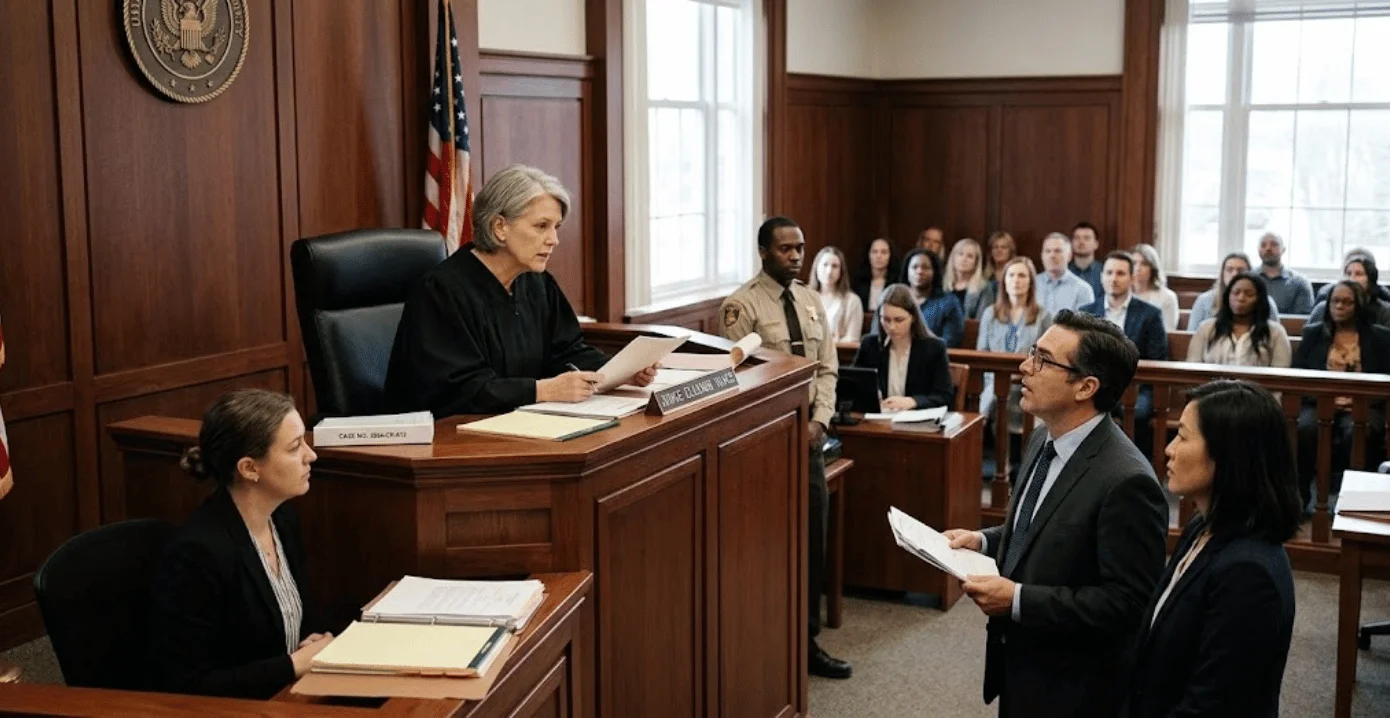
If you searched sua sponte meaning, the basic definition is simple. The Latin phrase means “of one’s own accord.” In U.S. law, it usually describes a court acting without either party requesting that action.
| Key point | Plain-English explanation |
|---|---|
| Basic meaning | Of one’s own accord or on one’s own initiative |
| Common legal use | A judge or court acts without a party requesting it |
| Typical context | Jurisdiction, dismissal, court procedure, or case management |
| Is it a motion? | Not usually; the action originates with the court |
| Does it guarantee an outcome? | No; the court still must follow governing law and procedure |
| Common U.S. equivalent | “On the court’s own motion” |
Direct answer: In American courts, the phrase describes action that begins with the judge or court itself. Neither the plaintiff nor the defendant asks for that specific action. Common examples include examining jurisdiction, dismissing certain cases, or addressing procedural problems the court identifies on its own.
What Is the Sua Sponte Meaning in Legal Terms?
The phrase describes judicial action taken without a formal request from either side. Cornell’s Legal Information Institute defines it as action taken on the court’s own motion. Federal and state court materials use the term in the same general way.
The important idea is who initiated the action. Normally, one party files a motion and asks the judge to rule. Here, the court identifies an issue and addresses it without waiting for that request.
This distinction matters because American litigation normally depends heavily on the parties. Lawyers present claims, defenses, evidence, and motions for judicial consideration. A court-initiated issue therefore stands apart from ordinary party-driven motion practice.
Where Does the Phrase Come From?
The expression comes from Latin and translates broadly as “of one’s own accord.” Legal dictionaries also describe it as acting voluntarily or on one’s own initiative. The phrase has become established terminology in American judicial writing.
You may see slightly different English translations in dictionaries and court glossaries. Those variations do not substantially change the legal concept. Each points toward action that originates with the court rather than a litigant.
Do not confuse the expression with every decision a judge makes independently. Judges always decide legal questions themselves. The label concerns how a particular issue or action reached the court for consideration.
How Do You Pronounce Sua Sponte?
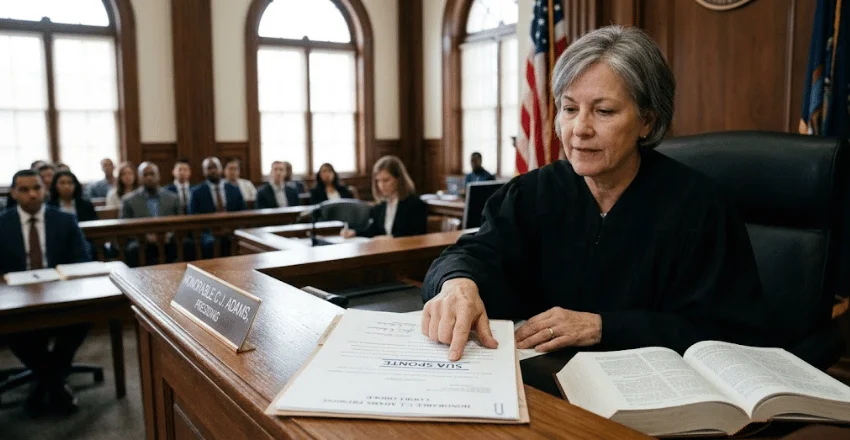
English speakers commonly pronounce the phrase approximately as “SOO-uh SPON-tay.” Some sources recognize minor pronunciation variations. Dictionary.com lists forms ending with sounds similar to “tee” or “tay.”
Perfect classical Latin pronunciation is rarely important for understanding a case. Lawyers and judges may pronounce Latin terms somewhat differently. The written meaning remains the same regardless of those variations.
For readers, recognizing the phrase on a docket or court order matters more. It signals that the court initiated the particular action. That clue can help explain why neither party files a corresponding motion.
Common Examples of Courts Acting on Their Own
Jurisdiction provides one of the clearest examples. Federal courts have limited authority and must possess subject-matter jurisdiction over cases they hear. A court may raise a jurisdiction problem itself even when neither party objects.
Dismissal provides another familiar example. Courts may sometimes dismiss cases on their own for recognized procedural or jurisdictional reasons. Cornell notes examples involving lack of jurisdiction, failure to prosecute, or noncompliance with court rules.
Other situations depend on the governing rules and circumstances. Courts might identify procedural defects or address issues needed to manage proceedings lawfully. That authority is not unlimited and varies by context.
Five simplified examples include:
- A federal judge notices that subject-matter jurisdiction is missing.
- A court addresses failure to comply with an applicable procedural rule.
- A judge identifies an unresolved issue involving the court’s authority.
- A court considers dismissal where governing law permits court-initiated action.
- A judge raises a procedural matter that neither party presented first.
Sua Sponte Action vs. a Party’s Motion
A traditional motion starts with a litigant. That party asks the judge for specified relief and usually explains the legal basis. The opposing party normally receives an opportunity to respond under applicable rules.
Court-initiated action reverses that starting point. The judge or court identifies the matter before receiving a request seeking that specific result. FindLaw describes the concept as acting on the court’s own motion or initiative.
This difference matters when reading court documents. An order may discuss an issue that no party placed in a motion. Knowing who raised the issue helps readers follow the procedural history more accurately.
| Situation | Who starts it? | Typical form |
|---|---|---|
| Party motion | Plaintiff or defendant | Motion requesting specific relief |
| Court-initiated action | Judge or court | Order, notice, ruling, or raised issue |
| Joint request | Both parties | Stipulation or agreed motion |
| Appeal | Usually an appealing party | Notice of appeal and appellate briefing |
Why Can a Judge Raise an Issue Without Being Asked?
Courts have responsibilities that do not always depend on a lawyer raising them first. Jurisdiction is especially important because a court needs legal authority to decide the matter. Federal courts may therefore examine jurisdiction even when litigants have not challenged it.
Procedural rules can create other situations where judicial action becomes appropriate. A court may need to enforce its orders or address failures affecting case administration. The exact authority depends on the rule, statute, precedent, and type of proceeding.
That does not mean judges possess unrestricted power to introduce any issue they choose. American courts generally operate through an adversarial system centered on what the parties present. Appellate decisions have recognized limits on when courts should independently reach unraised questions.
Does Sua Sponte Mean the Judge Is Biased?
No. The term describes how an action began, not why the judge took it. It does not automatically suggest bias, misconduct, or favoritism toward either side.
A court can identify a legal issue independently while remaining neutral. For example, jurisdiction concerns the court’s power to hear a case. Addressing that problem may be necessary regardless of which side would benefit.
A party who believes a court acted improperly must examine the actual rule and procedural history. The Latin label alone does not establish an error. Questions about notice, authority, and an opportunity to respond may require separate legal analysis.
Can a Court Dismiss a Case on Its Own?
Sometimes it can, although the legal basis matters. Cornell notes that courts may dismiss certain actions on their own motion when valid grounds exist. Examples can include jurisdiction problems or failures involving prosecution and procedural requirements.
A dismissal does not have the same effect in every case. Some dismissals are with prejudice, while others permit a claim to be filed again. The governing order and applicable procedural law determine the consequences.
Readers researching civil procedure may also find BlogsNBytes’ civil litigation process guide useful. It explains motions, discovery, court procedures, settlement, and other common stages of U.S. civil cases.
What Does a Sua Sponte Order Mean?
A court order carrying this description generally indicates that the court initiated the underlying action. It does not mean a litigant successfully filed the ordinary motion requesting that result. The order itself should explain the authority and reasoning used.
Read the full document rather than relying on the phrase alone. Courts may act independently for very different procedural reasons. The legal consequences depend on what the order requires, dismisses, questions, or schedules.
Deadlines may also follow an unexpected order. A party might need to submit briefing, provide information, or respond within a specified period. Anyone involved in an active case should follow the actual order and applicable court rules.
Why the Term Matters for Self-Represented Litigants
People representing themselves may encounter unfamiliar Latin expressions in judicial orders. Understanding the terminology can make the procedural history easier to follow. It can also explain why a judge addressed something no party formally requested.
Self-represented litigants remain responsible for deadlines and procedural requirements. Court-initiated action does not erase those responsibilities. BlogsNBytes explains those considerations in its guide to appearing pro se in court.
Legal terminology can also carry different consequences across civil and criminal matters. Readers studying broader terminology can review BlogsNBytes’ plain-English guide to homicide under U.S. law. That article similarly separates everyday meanings from specific legal consequences.
Is Sua Sponte the Same as Suo Motu?
The phrases express closely related ideas about an authority acting without an outside request. “Sua sponte” is the expression commonly encountered in U.S. court decisions. “Suo motu” or “suo moto” appears more often in some other legal systems.
For an American audience, the first expression is usually the more useful search term. U.S. legal dictionaries, federal decisions, and state court glossaries frequently use it. The practical meaning remains centered on independent action.
Readers should still interpret either term within its jurisdiction. Procedural powers differ across court systems and case types. A general definition cannot establish whether a particular judicial act was legally permitted.
How to Read the Phrase in a Court Document
First, identify exactly what action the judge initiated. Next, find the rule, statute, or precedent cited in the order. Then check whether the parties receive an opportunity to respond.
The surrounding language usually provides more useful information than the Latin phrase. An order may concern jurisdiction, dismissal, evidence, procedure, or another issue. Each subject can involve different standards and consequences.
For complex civil disputes, professional advice may help clarify those consequences. BlogsNBytes’ guide to litigation lawyers explains when civil litigants commonly seek counsel. Legal advice should come from a licensed lawyer familiar with the relevant jurisdiction.
Frequently Asked Questions
What is the sua sponte meaning in plain English?
It means “on one’s own initiative” or “of one’s own accord.” In court, it usually means the judge raised or acted on something without either party first requesting it. The term describes the source of the action, not its correctness.
Can a judge act without a motion from either side?
Yes, courts can address certain matters without receiving a party’s motion. Jurisdiction is a common example because courts must possess authority over cases they decide. Other circumstances depend on governing statutes, rules, and precedent.
Is a sua sponte decision automatically final?
No. The phrase says nothing by itself about whether a ruling is final or appealable. Finality depends on the type of order, procedural posture, and governing law.
Does the phrase apply only to judges?
American legal writing most commonly uses it for judges and courts. Broader usage can sometimes describe other authorities acting on their own initiative. Court usage remains the most important context for most U.S. readers.
Can a party ask a court to act this way?
A party can raise the issue with the court. Yet action taken because of a direct request may not fit the strict meaning. One federal appellate decision emphasized that action responding to a litigant differs from truly self-initiated action.
The Key Point to Remember
The easiest way to understand the term is to focus on who started the action. If the court raised the issue without a party requesting that specific step, the description may apply. The precise legal effect still depends on the governing law and the court’s order.
For real litigation, definitions are only a starting point. Rules differ among federal courts and state jurisdictions. Consult a licensed attorney when an unexpected order could affect your rights, deadlines, or case strategy.