


Cats may not speak in words, but they have a surprisingly rich vocal language. From a soft purr on the couch to a sharp hiss near another pet, different cat sounds can communicate attention, excitement, fear, frustration, discomfort, or a simple request for dinner. Learning those patterns can help you respond more appropriately while noticing when an unusual noise deserves closer attention.
The important part is not to treat every sound like a word with one fixed translation. Cats vary widely in how vocal they are, and the same noise can mean different things depending on posture, surroundings, routine, and what happens immediately before or after it. The most reliable approach is to interpret vocalizations together with body language and changes in your cat’s normal behavior.
Cat sounds can signal greetings, requests, excitement, fear, frustration, reproductive behavior, or physical discomfort. Meows are usually aimed at people, purrs often accompany relaxation but can also occur during stress or pain, hisses and growls ask for distance, and sudden persistent yowling deserves closer attention, especially when other behavior changes appear.
What Different Cat Sounds Mean at a Glance
| Cat sound | What it commonly communicates | How to respond |
|---|---|---|
| Meow | Greeting, request, hunger, attention | Check the situation and normal routine |
| Purr | Relaxation, social contact, sometimes stress or discomfort | Look at the cat’s overall behavior |
| Trill | Friendly greeting or invitation to follow | Respond calmly and interact |
| Chirp | Excitement or focused attention | Observe what has caught the cat’s interest |
| Chatter | Prey-related excitement or arousal | Usually observe without concern |
| Hiss | Fear or defensive warning | Stop approaching and provide space |
| Growl | Fear, irritation, conflict, resource guarding | Do not force interaction |
| Spit | Intense defensive reaction | Back away and reduce the perceived threat |
| Yowl | Distress, mating behavior, conflict, discomfort | Find the cause and investigate unexplained changes |
| Caterwaul | Prolonged loud calling | Check environment, health, and reproductive status |
| Shriek or scream | Acute distress, fear, pain, or conflict | Assess the situation immediately |
| Kitten mew | Hunger, separation, warmth, or attention needs | Check the kitten and caregiving situation |
Why Do Cats Make So Many Different Sounds?
Feline vocal communication is more complicated than a simple collection of meows. Cats can produce sounds with the mouth closed, gradually opening and closing, or held open, and their vocal range includes purrs, meows, chirps, trills, growls, hisses, yowls, and other noises. Different cats also develop different habits, which means one household may have a highly talkative cat while another cat communicates mostly through movement and posture.
One especially interesting pattern involves the ordinary meow. Kittens meow when communicating with their mothers, while adult domestic cats commonly direct much of their meowing toward people. A household cat may gradually learn which sounds make its human open a door, fill a bowl, offer attention, or begin a play session.
That does not mean every vocal cat has deliberately created a secret language. Personality, age, environment, learned behavior, reproductive status, breed tendencies, and health can all influence how often an individual cat vocalizes. Your cat’s normal pattern is therefore more useful as a reference point than a generic sound chart considered by itself.
12 Common Cat Sounds and What They Usually Mean
1. The Everyday Meow
A meow is one of the most flexible sounds a household cat makes, so context matters more than the noise alone. Cats may meow to greet you, ask for food, seek attention, react to a closed door, or try to start an interaction. Some cats also develop slightly different meows for different situations because certain sounds have worked in the past.
A sudden increase in ordinary meowing can be more important than whether a particular meow sounds short, long, high, or low. First check obvious needs such as food, water, litter-box access, play, and whether something in the household has recently changed. If the increase persists without an obvious explanation or occurs with hiding, appetite changes, restlessness, or other unusual behavior, veterinary advice may be appropriate.
2. Purring
Purring is strongly associated with comfortable moments such as resting, being stroked, nursing, or settling beside a familiar person. That association is useful, but purring should not automatically be interpreted as proof that a cat feels completely comfortable. Cats may also purr when they are stressed, frightened, uncomfortable, or physically unwell.
Look at what accompanies the purr before deciding what it means. A loose body, normal appetite, relaxed eyes, and comfortable resting posture support a very different interpretation from purring while hunched, hiding, refusing food, or resisting movement. The sound is one clue, not a complete emotional or medical diagnosis.
3. Trilling
A trill is a short rolling sound that often resembles “mrrp” rather than a full meow. Many cats use trills in friendly situations, including greeting a familiar person or approaching something they want. Mother cats may also use similar vocalizations when interacting with kittens.
Owners often notice a trill immediately before their cat walks toward another room, a food area, a toy, or an interesting object. Following the cat for a moment can sometimes reveal exactly what triggered the communication. When the body remains loose and friendly, trilling is generally one of the less concerning feline noises.
4. Chirping
Chirps are brief, high-pitched noises that can appear during greetings or moments of strong interest. Some cats chirp toward people, while others produce chirp-like noises when watching birds, squirrels, insects, or another exciting target. The surrounding situation is usually more informative than trying to assign one universal translation to the sound.
A chirping cat sitting comfortably at a secure window shows a very different emotional state than a cat hiding and crying repeatedly. Watch the ears, body tension, tail, and object of attention as well as listening to the vocalization. Combining these clues makes it easier to distinguish harmless excitement from stress or another behavioral concern.
5. Chattering
Cat chatter typically involves rapid jaw movements or clicking sounds while the animal watches prey it cannot immediately reach. Birds outside a window are a classic trigger, although insects, squirrels, and other moving animals can produce similar reactions. Several explanations have been suggested for this behavior, including predatory excitement and frustration.
For most cat owners, the important point is that occasional chattering during focused prey watching is usually recognizable from its context. Indoor play with wand toys, small moving toys, and other appropriate enrichment can give cats opportunities to express natural stalking and chasing behavior safely. You usually don’t need to correct the sound itself when the cat otherwise appears healthy and comfortable.
6. Hissing
A hiss is one of the clearest cat sounds because its message is usually about distance rather than conversation. Cats commonly hiss when they feel frightened, threatened, cornered, overwhelmed, or unwilling to tolerate continued interaction. Generally, treat the sound as a warning that the cat needs more space.
Punishing a hiss does not remove the fear or perceived threat that caused it. Stop advancing, avoid grabbing the cat, and give the animal enough space to retreat whenever possible. A cat that suddenly begins hissing during ordinary handling despite previously tolerating it may also need medical attention because pain can change how an animal reacts to touch.
7. Growling
A feline growl is usually low, sustained, and considerably less welcoming than a trill or ordinary meow. Cats often growl out of fear, conflict, territorial tension, or when they feel a person or animal is getting too close. Continuing to handle or corner the cat can escalate the situation into hissing, swatting, scratching, or biting.
Growling does not necessarily mean a cat has an aggressive personality. Pain, competition with another animal, food guarding, an unfamiliar environment, or previous frightening experiences may all contribute to defensive behavior. Identifying and reducing the trigger is usually more useful than treating the vocalization itself as bad behavior.
8. Spitting
A spit is an abrupt defensive sound that can occur alongside an intense hiss when a frightened cat feels seriously threatened. It may be accompanied by exposed teeth, flattened ears, raised fur, a tense body, or an obvious attempt to escape. Together, these signs usually indicate that the cat wants the perceived threat to move away immediately.
Trying to pet or restrain the animal unnecessarily at that point can make the situation worse. Allow distance and remove other animals or environmental stressors when you can do so safely. Repeated extreme defensive reactions without an identifiable trigger may justify veterinary or professional feline-behavior guidance.
9. Yowling
A yowl is generally longer, louder, and more drawn out than an ordinary conversational meow. Cats may yowl because of reproductive behavior, confinement, conflict, discomfort, illness, age-related changes, or distress, so the sound depends heavily on context. A normally quiet cat that suddenly begins yowling deserves more attention than a cat with a long-established habit of vocalizing loudly.
The location of the yowling can also provide useful information. Vocalizing repeatedly around the litter box, for example, may indicate difficulty or discomfort associated with urination or bowel movements. Persistent unexplained yowling should therefore be investigated rather than dismissed as a cat simply becoming dramatic.
10. Caterwauling
Caterwauling is a particularly loud, prolonged vocalization that may sound like a mixture of a howl, yowl, and whine. It can occur during mating behavior, territorial interactions, attempts to gain attention, or when something is physically or environmentally wrong. Because several different triggers can produce it, owners should look beyond the sound itself.
A one-time episode with a clear cause is different from a new recurring pattern. Check whether the cat is trapped, reacting to outdoor cats, displaying reproductive behavior, struggling with elimination, or showing other unusual changes. When the cause remains unclear, especially in a normally quiet cat, a veterinary assessment may be appropriate.
11. Screaming or Shrieking
A sudden feline scream or shriek is hard to ignore and usually happens during a highly intense event. Acute fear, a fight, injury, or pain can produce much more dramatic vocalization than ordinary attention requests. The immediate priority is to determine whether the cat is injured or involved in an active conflict.
Do not place your bare hands between fighting cats because redirected bites and scratches can cause serious injuries. Once the immediate environment is safe, look for limping, wounds, difficulty breathing, collapse, abnormal movement, or continuing signs of pain. A cat showing severe breathing problems, major trauma, collapse, or difficulty passing urine needs urgent veterinary attention.
12. Kitten Mews
Very young kittens communicate with their mother differently than adult cats do with one another. Small mews and cries can help a kitten obtain attention when hungry, separated, uncomfortable, cold, or in need of maternal care. As cats mature, the familiar meow becomes particularly noticeable in their communication with humans.
Occasional vocalizing from an active, feeding kitten is different from persistent crying in a weak or poorly feeding youngster. Very young kittens are physically vulnerable, so don’t judge changes in nursing, warmth, activity, breathing, or weight by sound alone. Seek veterinary guidance if a kitten seems unwell or repeatedly cries without an obvious environmental reason.
Cat Body Language Gives the Sound Its Meaning
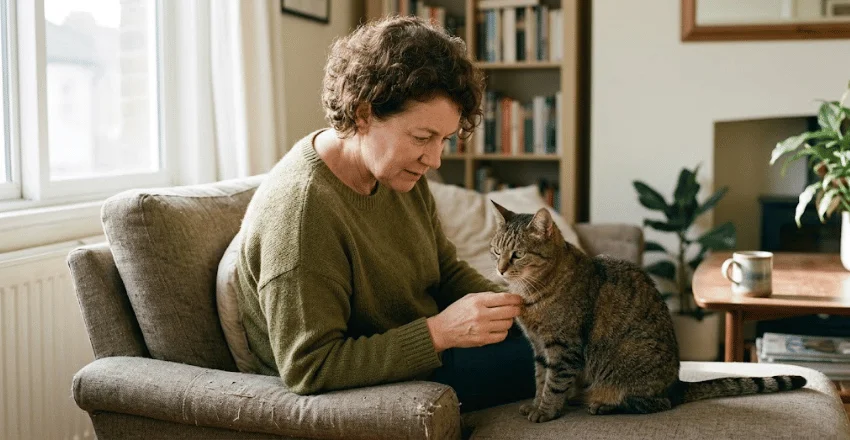
One of the easiest ways to misunderstand cat sounds is to listen while ignoring the rest of the cat. A low noise from a cat lying comfortably beside you carries a very different message from the same general noise paired with flattened ears, a rigid body, enlarged pupils, raised fur, or an attempt to escape. Vocalizations make the most sense when interpreted alongside posture and surroundings.
Start with the cat’s ears, eyes, tail, posture, activity, location, and immediate trigger. Then compare what you are seeing with the animal’s normal routine because a significant change can matter more than whether the sound fits a textbook description. Over time, this approach can help owners distinguish a familiar dinner request from fear, conflict, pain, or genuinely unusual behavior.
It is also useful to notice patterns instead of reacting to every individual meow. A cat that regularly trills before leading you toward a favorite toy has established a recognizable household routine, while a newly persistent cry from that same cat represents a meaningful change. Knowing your own cat’s baseline often tells you more than memorizing dozens of supposed feline translations.
When Do Cat Sounds Mean You Should Call a Veterinarian?
A new vocal pattern becomes more concerning when it appears with other physical or behavioral changes. Increased hiding, appetite or thirst changes, unusual aggression, reduced activity, changes in jumping, altered litter-box behavior, or completely new forms of yowling can accompany illness or discomfort. Cats can conceal pain surprisingly well, so changes noticed by people who live with them can provide important early clues.
Pay particular attention to vocalizing in or around the litter box. Repeated attempts to urinate, crying during urination, or producing very little or no urine can indicate a potentially serious urinary problem. A cat repeatedly straining while producing little or no urine should receive urgent veterinary attention rather than waiting to see whether the problem disappears.
Nighttime yowling in an older cat also deserves closer attention when it is new or increasing. Senior cats may experience sensory changes, confusion, discomfort, or other medical issues that alter their sleep and vocal behavior. A veterinarian can look for physical causes before treating the behavior as a simple age-related habit.
How to Respond When Your Cat Becomes More Vocal
Begin by checking what changed instead of immediately trying to stop the noise. Feeding schedules, litter-box conditions, boredom, a new pet, visitors, outdoor animals visible through windows, changes in household routines, pain, and illness can all affect vocal behavior. Once you identify the likely trigger, your response can address the underlying need rather than focusing only on the sound.
For ordinary attention seeking, consistency matters because cats quickly learn which actions produce a response. For defensive noises such as hissing and growling, however, prioritize providing space and reducing the perceived threat instead of ignoring a frightened animal until the situation escalates. Medical warning signs belong in a separate category and should be evaluated as potential health concerns rather than training problems.
Household organization can also make everyday routines easier when you store food, treats, medications, feeding scoops, and cleaning supplies in several places. If pet-related items share space with ordinary kitchen essentials, learning how to organize your kitchen drawers can help keep frequently used supplies accessible while reducing clutter. Make sure medications, cleaning products, strings, sharp objects, and unsafe foods stay secured where your cat cannot reach them.
Keeping a brief record can help when the cause of a new sound is unclear. Note when the vocalization happens, what it sounds like, what your cat was doing beforehand, whether eating and litter-box habits are normal, and whether any other behavior has changed. A short phone video can also preserve the sound and surrounding behavior if the episode does not occur during a veterinary appointment.
If you share an interesting vocalization online, avoid presenting a social-media interpretation as a substitute for professional veterinary advice when health concerns are involved. If you post your cat clips publicly, you may also want to see who shared your Instagram post after publishing it, especially when a funny chirp or unusual meow starts circulating. For medical questions, however, the most useful recording is the one you can show directly to your veterinarian.
Why Does My Cat Sound Different From Other Cats?
Not every cat produces the same collection of noises. Some cats are naturally talkative and seem to comment on almost everything happening around them, while others rarely vocalize except in very specific circumstances. Genetics, individual temperament, early experience, living environment, and learned interactions with people can all contribute to those differences.
The sounds may also change gradually during a cat’s lifetime. A kitten’s cries, an adult cat’s attention-seeking meows, and an older cat’s nighttime vocalizations can occur for very different reasons even when they seem superficially similar. That is another reason to consider age and personal history before assigning meaning to a particular noise.
Changes in the voice’s actual quality can matter as well. A previously clear meow that becomes unusually hoarse, weak, strained, or absent may reflect temporary irritation, heavy vocal use, or a medical problem affecting the throat or respiratory system. Persistent voice changes deserve attention, particularly when they occur with coughing, gagging, breathing difficulty, reduced appetite, or low energy.
Do Cats Understand Human Responses to Their Sounds?
Cats can learn which behaviors produce useful results. If a particular meow repeatedly leads to food, access to another room, play, or physical attention, the cat may use that vocalization more often in similar situations. This does not mean the sound functions exactly like a human word, but it does show how communication patterns can develop between an individual cat and its household.
Owners also become better at recognizing familiar patterns over time. You may eventually distinguish your cat’s breakfast meow from its door-opening request or notice that a particular trill usually precedes a request to follow. Those interpretations are strongest when they are based on repeated situations rather than assumptions about pitch alone.
This learning process works in both directions. Cats observe human routines, and humans learn to recognize feline signals, creating a household-specific communication system built from repetition and consequences. Understanding that process can help prevent owners from accidentally rewarding excessive attention-seeking while still responding appropriately to genuine needs.
Can You Tell a Cat’s Mood From the Pitch of Its Meow?
Pitch can provide clues, but it shouldn’t be treated as a reliable emotional decoder on its own. A high-pitched noise might occur during excitement, greeting, fear, or a request, while a low vocalization may accompany irritation, tension, or another emotional state. Individual cats also differ enough that one cat’s ordinary voice may sound unusually high or low compared with another cat.
Duration and repetition can be useful additional clues. A single short meow may function as a casual greeting, while repeated extended vocalizations can indicate stronger motivation or persistent demand. Even then, the surrounding environment and body language remain essential for deciding what the cat is communicating.
Instead of asking whether one pitch always means one emotion, ask what happened before the sound and what the cat does next. That sequence often reveals whether the animal wants food, attention, distance, play, access to a room, or relief from discomfort. Context turns an isolated noise into a much more useful behavioral signal.
Why Do Some Cats Barely Meow?
A quiet cat is not necessarily unhappy, unhealthy, or unfriendly. Some cats naturally communicate through eye contact, body position, tail movements, physical proximity, or simply moving toward the thing they want. Others may have learned that vocalizing is unnecessary because their people respond to subtler signals.
The key question is whether quiet behavior is normal for that individual cat. A cat that has always been quiet and continues eating, moving, playing, grooming, and using the litter box normally may simply have a less vocal personality. A normally talkative cat that suddenly becomes silent, however, represents a change that deserves closer observation.
Owners should also listen for changes in voice quality, not just meow count. A cat attempting to vocalize but producing only a faint, raspy, or strained sound may have a different issue from a healthy cat that simply chooses not to meow often. Persistent or unexplained changes are worth discussing with a veterinarian.
Frequently Asked Questions About Cat Sounds
Why does my cat meow at me so much?
Adult domestic cats commonly use meowing to interact with humans, and repeated meows can become effective requests because people respond. Your cat may be greeting you, asking for food, requesting access somewhere, seeking play, or wanting attention. A major unexplained increase in vocalization is different from a naturally talkative personality and should be considered alongside health and behavioral changes.
Do adult cats meow at other cats?
Adult cats generally rely less on ordinary meowing when communicating with other adult cats than they do when interacting with people. Feline-to-feline communication can also involve scent, posture, facial expressions, hissing, growling, yowling, and other signals. Adult cats can still meow around other cats, so it is better to recognize human-directed meowing as especially common rather than claim that adult cats never meow at one another.
Why does my cat chirp or chatter at birds?
These noises commonly occur when cats become intensely focused on visible prey such as birds, squirrels, or insects. Several explanations have been proposed for chattering, including predatory excitement and frustration when the target cannot be reached. An otherwise relaxed indoor cat chattering at a secure window is usually displaying recognizable prey-related behavior.
Can a cat purr when it is in pain?
Yes, purring is not limited to obviously happy situations. Cats may also purr during stress, discomfort, fear, or pain, which is why the surrounding behavior matters. Purring combined with hiding, reduced appetite, abnormal posture, mobility changes, or unusual sensitivity to touch deserves closer attention.
Why is my cat suddenly yowling at night?
Nighttime yowling can have behavioral, environmental, reproductive, or medical causes. In older cats, changes in hearing, vision, cognition, comfort, or general health may contribute to increased nighttime vocalization. A new or persistent pattern is worth discussing with a veterinarian, rather than assuming it is simply an annoying habit.
What cat sound means the cat is angry?
Growling, hissing, and spitting are among the clearest warning sounds, but describing them only as signs of anger can be misleading. These vocalizations frequently occur because a cat is frightened, threatened, cornered, uncomfortable, or trying to increase distance from a person or another animal. Giving the cat space and identifying the trigger is safer than pushing interaction until the warning escalates.
Why does my cat trill when it sees me?
Trilling commonly occurs during friendly social interactions and can function as a greeting or invitation to pay attention. Some cats trill before walking toward food, toys, doors, or another destination they want a person to notice. A relaxed cat that regularly trills when you arrive is usually displaying a familiar social behavior.
Why does my cat make strange noises while sleeping?
Cats can occasionally twitch, move their paws, or make small noises while sleeping. Brief sounds during otherwise peaceful sleep are usually less concerning than repeated distress vocalizations accompanied by waking, disorientation, breathing problems, or abnormal movements. If sleep-related episodes become intense, frequent, or noticeably different from your cat’s normal behavior, record what happens and discuss it with a veterinarian.
Understanding Your Cat Starts With Listening for Change
Learning cat sounds is less about memorizing a perfect feline dictionary and more about recognizing patterns. Listen to the vocalization, look at the body language and environment, and compare the situation with what is normal for your individual cat. That combination gives you a much more reliable picture than pitch, volume, or one isolated meow.
Most chirps, trills, purrs, and everyday meows belong to ordinary feline communication, while hisses and growls clearly tell you to respect the cat’s space. Sudden or persistent vocal changes deserve closer attention, particularly when they occur with pain, appetite changes, litter-box problems, breathing difficulty, hiding, or unusual behavior. Knowing the difference can make you a better listener and may sometimes help you recognize when your cat needs medical care sooner rather than later.

