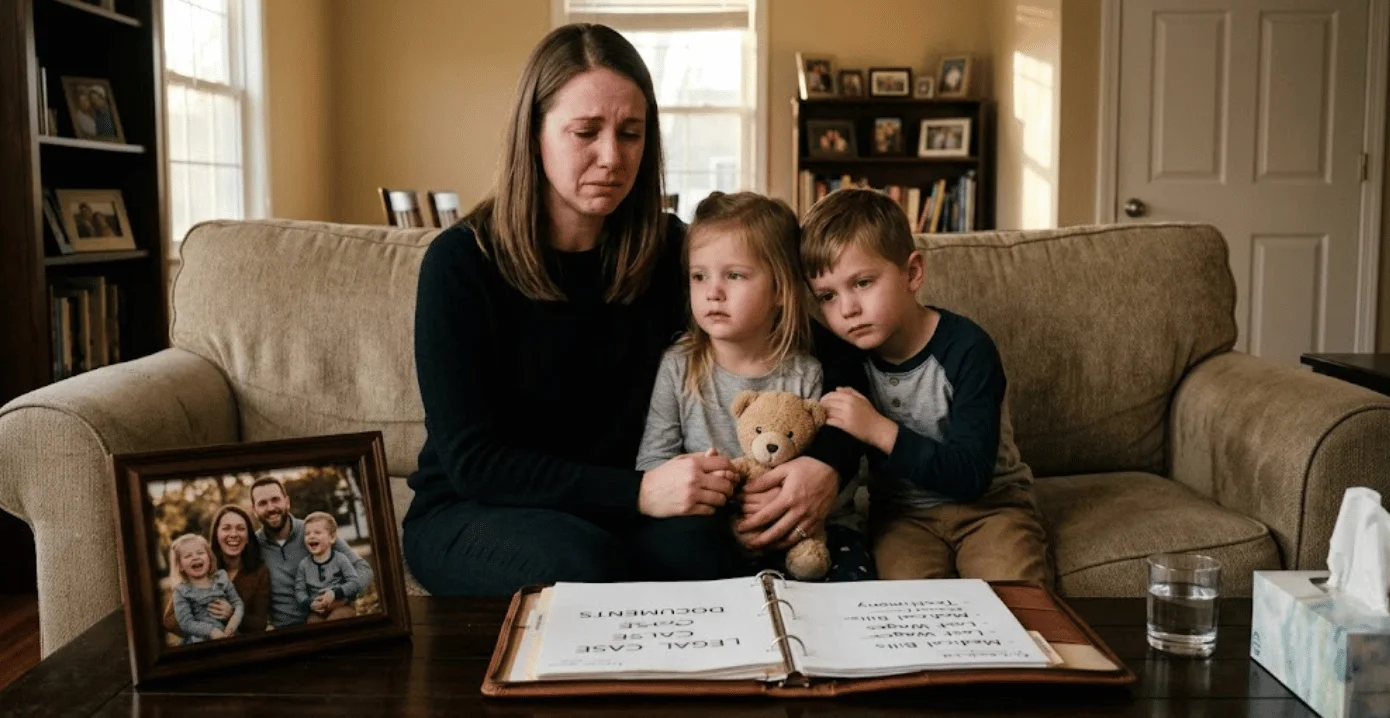
A serious injury can change more than one person’s life. When an injured person can no longer provide the companionship, affection, intimacy, care, or assistance that previously formed part of a close relationship, the law may recognize a related loss of consortium claim. In the United States, however, who can make that claim and what compensation is available depend heavily on state law.
Short answer: Loss of consortium is a claim for harm to a close family relationship caused by another person’s wrongful injury. It most often involves a spouse’s loss of companionship, affection, intimacy, care, or assistance. Eligibility, required proof, deadlines, and recoverable damages depend on the law of the state handling the case.
| Key question | General U.S. answer |
|---|---|
| What is consortium? | Compensation for certain nonfinancial losses suffered when an injury seriously affects a legally protected family relationship. |
| Who usually files? | The injured person’s spouse is the traditional claimant. |
| Can children or parents file? | Some states recognize parent-child consortium claims in certain circumstances, while others restrict or reject them. |
| Is it the same as lost wages? | No. Lost earnings and financial support are generally treated separately. |
| Is there a standard settlement amount? | No. Value depends on the evidence, state law, severity and duration of the relationship loss, and any applicable damage limits. |
| Is there one nationwide deadline? | No. Filing periods and procedural requirements vary by state and claim type. |
What Does Loss of Consortium Mean?
Loss of consortium refers to the loss or impairment of benefits people receive from certain close relationships. Cornell Law School’s Legal Information Institute identifies seven benefits that can fall within a marital consortium claim: companionship, comfort, affection, love, shared activities, household assistance, and sexual relations. The concept focuses on damage to the relationship rather than simply repeating the injured person’s medical bills or lost income.
A consortium claim does not require the relationship to disappear completely. An injury may substantially reduce companionship, physical affection, shared activities, emotional support, or the practical assistance one spouse previously provided even when the couple remains together. California’s civil jury guidance, for example, recognizes compensation for impairment of marital companionship and services and states that a partial loss can be compensable under California law.
The key qualification is that no single federal rule governs ordinary consortium claims nationwide. Each state determines which relationships qualify, what must be proven, how the claim relates to the injured person’s case, and what damages may be recovered. Advice based on another state can therefore be misleading even when the underlying accident looks similar.
Who Can File a Consortium Claim?

A husband or wife of the injured person is the traditional consortium claimant in U.S. tort law. The claimant generally alleges that someone else’s wrongful conduct injured the spouse and, as a consequence, damaged the marital relationship. Some jurisdictions describe the resulting action as derivative of the injured spouse’s claim, while others give the spouse a legally distinct claim with its own procedural consequences.
Whether another family member can recover is far less settled. Cornell notes that some jurisdictions recognize forms of parental or filial consortium, meaning claims arising from the loss suffered by a parent or child, while many states restrict these claims substantially. Friends, siblings, extended relatives, and unmarried partners generally should not assume that a close emotional bond by itself creates a legally recognized consortium claim.
Marriage timing may also matter. California authority lists a valid marriage at the time of injury among the elements of its spousal claim, and Florida decisions have likewise applied a marriage-before-injury rule in the circumstances before those courts. Someone who marries the injured person after the underlying injury should not assume that the later marriage creates a claim for earlier harm.
What Must Be Proven?
Although the precise elements differ by state, a typical claim connects an actionable injury to a legally protected relationship and then proves that the relationship actually suffered because of that injury. California provides a useful illustration: its authorities identify a valid marriage, tortious injury to the spouse, actual loss of consortium, and proximate causation as the four elements of a spousal consortium cause of action. Those elements should not be treated as a nationwide legal test, but they show the questions that commonly appear in these cases.
| Issue to prove | What the evidence generally needs to show |
|---|---|
| Qualifying relationship | The claimant had the relationship required by applicable state law when the relevant injury occurred. |
| Underlying wrongdoing | Another party committed negligence, another tort, or other actionable wrongdoing recognized in the underlying claim. |
| Actual relationship loss | The injury materially affected companionship, affection, intimacy, support, services, care, or another protected aspect of the relationship. |
| Causation | The claimed relationship changes resulted from the injury rather than an unrelated problem. |
| Duration and severity | Evidence shows how substantial the change was and whether it was temporary, long-term, or expected to continue. |
A spouse does not automatically receive consortium damages merely because the injured person wins a personal injury case. Florida appellate authority, for example, has emphasized that the spouse seeking consortium damages must present competent evidence concerning how the incident affected the marital relationship. The claimant therefore needs to prove their own loss instead of relying solely on proof that the other spouse was injured.
What Losses Can Consortium Damages Cover?
Consortium is broader than sexual intimacy. Courts may consider the loss of companionship, affection, emotional support, care, assistance, shared activities, society, moral support, and physical intimacy, depending on the jurisdiction. California’s current civil jury instruction offers a clear example by identifying love, companionship, comfort, care, assistance, protection, affection, society, moral support, sexual relations, and, where applicable, the ability to have children.
At the same time, not every consequence of an injury belongs inside a consortium award. Lost wages, loss of financial support, medical expenses, replacement services, and other measurable financial harm may be addressed through different categories of damages. Separating these categories is important because a claimant generally cannot recover twice for the same loss under two different labels.
| Potential relationship loss | Usually a consortium issue? |
|---|---|
| Reduced companionship | Often yes |
| Loss of affection or comfort | Often yes |
| Loss of marital intimacy | Often yes |
| Reduced emotional support | Often yes |
| Loss of shared activities | Potentially |
| Loss of household assistance as a relationship benefit | Potentially, depending on state law and how damages are classified |
| Injured spouse’s lost salary | Generally a separate economic-damages issue |
| Medical bills | Generally a separate damages category |
| Claimant’s own lost earnings from providing care | Treatment varies and should not automatically be labeled consortium damages |
What Evidence Helps Prove the Loss?
Consortium damages are intangible, so evidence usually focuses on what the relationship looked like before the injury and what changed afterward. Medical records may help establish the seriousness and duration of the physical or psychological limitations, while testimony can explain their real effect on daily married life. Nolo notes that pursuing such a claim may also expose private aspects of a relationship to discovery, depositions, or trial testimony.
| Evidence | What it may help establish |
|---|---|
| Claimant testimony | Changes in companionship, affection, intimacy, caregiving, responsibilities, and shared life |
| Injured spouse’s testimony | Physical or emotional limitations affecting the relationship |
| Medical records | Nature, severity, prognosis, and duration of the underlying injury |
| Family or friend testimony | Observable differences in activities, household roles, or interaction |
| Calendars, photographs, or activity records | Before-and-after changes in travel, hobbies, social activities, or family routines |
| Counseling or treatment records, where relevant and legally discoverable | Relationship or emotional consequences connected to the injury |
| Evidence of household responsibilities | Changes in assistance, caregiving, and practical contributions |
Anyone considering such a claim should understand the privacy tradeoff before filing. When someone asks for compensation based on damage to an intimate relationship, the opposing side may seek information to test whether the claimed change actually resulted from the accident. A lawyer can explain what information may become discoverable and whether the potential recovery justifies making those matters part of the case.
How Much Is a Loss of Consortium Claim Worth?
No reliable national calculator, standard multiplier, or average settlement amount determines what a consortium claim is worth. These damages are generally noneconomic because companionship and affection do not come with receipts or market prices. Courts and juries instead evaluate the evidence and determine a reasonable amount under the law that applies to the case.
Important considerations include the seriousness of the underlying injury, the strength and nature of the relationship before the accident, the specific benefits lost, the claimant’s age and circumstances, and whether the impairment is temporary or permanent. Future limitations may also matter when medical evidence supports a continuing effect on the relationship. A short recovery from a minor injury ordinarily presents a very different damages picture from permanent paralysis, catastrophic brain injury, or another long-term condition that fundamentally changes everyday married life.
State damage laws may create additional limits, especially in certain types of cases such as medical malpractice. Even a jury’s valuation may therefore be affected by statutory caps, allocation rules, or other state-specific restrictions on non-economic damages. A statewide cap quoted online should never be assumed to apply without checking its current language, the type of defendant, the cause of action, and the date of injury.
Is the Claim Separate or Derivative?
This is one area where oversimplified explanations can create problems. In many jurisdictions, consortium is described as derivative because the claim depends on actionable wrongdoing against the injured family member; if the underlying tort claim fails, the consortium claim may fail with it. Florida decisions provide a clear example of this dependency while also recognizing that the spouse suffers a separate injury to their own relationship rights.
Other jurisdictions characterize the procedural relationship differently. A 2026 federal decision discussing New Hampshire law noted that New Hampshire treats a spouse’s consortium claim as separate and distinct, contrasting that approach with states where the claim is considered derivative. The practical lesson is more important than the terminology: never assume that the injured person can settle, release, waive, or litigate the main claim without possible consequences for the spouse’s claim.
How Long Do You Have to File?
No nationwide statute of limitations applies to ordinary consortium claims. Deadlines depend on state law, the underlying cause of action, when the claim accrued, the defendant involved, and sometimes special notice requirements. Because consortium claims may be connected procedurally to an injured spouse’s case, waiting until the main case is close to settlement can create avoidable problems.
A settlement or release deserves particular attention. New York’s highest court has held in one context that a spouse’s consortium claim that could have been joined with the injured spouse’s action was barred after the underlying personal injury claim was settled and released. Rules differ by jurisdiction, but the case illustrates why both spouses should understand the effect of settlement documents before signing them.
Handling litigation without counsel also means taking responsibility for deadlines, pleadings, evidence rules, and court procedures. Blogsnbytes’ guide to representing yourself in court explains those responsibilities and the risks that arise when a case involves substantial damages or complicated evidence.
What Types of Cases Can Include Consortium Damages?
Consortium issues most often arise when another person or business allegedly causes a serious injury through legally actionable conduct. The underlying case might involve negligence, a defective product, professional malpractice, unsafe property conditions, or another recognized tort. Whether a consortium claim is available still depends on the state and on the particular legal rules governing the underlying case.
| Underlying case | How consortium may become relevant |
|---|---|
| Motor vehicle collision | A severe injury may permanently change companionship, intimacy, caregiving, or shared activities. |
| Medical malpractice | A disabling treatment-related injury may affect the injured patient’s spouse or another claimant recognized by state law. |
| Defective product | Burns, paralysis, traumatic brain injuries, amputations, or other severe harm may produce substantial relationship changes. |
| Premises liability | A serious fall or other property-related injury may create long-term physical limitations affecting family life. |
| Workplace injury | Separate workers’ compensation and third-party liability rules may affect what claims are legally available. |
Defective-product cases can be particularly evidence-intensive because the claimant may need to preserve the product, establish the defect, identify responsible companies, and prove the injury before considering related damages. Blogsnbytes’ product liability lawyer guide explains evidence preservation, deadlines, expert issues, and attorney selection in more detail.
Work-related accidents can also involve a different legal framework from an ordinary negligence lawsuit. Workers’ compensation rules may affect which defendants you can sue and what remedies are available, while a separate third-party claim may exist depending on the facts. Blogsnbytes provides additional background on workplace injury claims in its workers’ compensation lawyer guide.
What Should You Do If an Injury Has Changed Your Marriage?
The strongest approach is to treat the relationship claim as part of the legal analysis early rather than adding it as an afterthought after settlement negotiations begin. Evidence is easier to understand when you document changes in medical condition, household responsibilities, caregiving, and shared activities as they happen. A local attorney can then determine whether state law recognizes the claim and how it should be coordinated with the injured person’s case.
- Identify the underlying claim. Determine what conduct allegedly caused the injury and which person, company, professional, or other party may be legally responsible.
- Confirm whether your relationship qualifies. Check the law of the state governing the case instead of assuming that marriage, domestic partnership, parenthood, or another relationship automatically creates standing.
- Document the before-and-after difference. Record significant changes in companionship, activities, caregiving, household responsibilities, affection, and other aspects of the relationship without exaggerating them.
- Preserve medical and case evidence. Keep treatment records, accident documents, relevant correspondence, photographs, and other material showing the seriousness and duration of the injury.
- Check deadlines before negotiating a final settlement. A release signed in the underlying injury case can affect related claims, depending on state law and the agreement’s language.
- Ask a licensed attorney in the relevant state to review the claim. A consultation can clarify eligibility, evidence, privacy implications, filing requirements, damages rules, and how to plead or settle the claim.
Consortium Claims vs. Wrongful Death
Consortium claims and wrongful death claims can overlap conceptually because both may involve the loss of companionship or society, but they should not be treated as interchangeable legal claims. When an injured person dies, state wrongful-death and survival statutes determine who may recover and what categories of damages are available. Some states may address consortium-type losses through the wrongful-death action rather than permitting a separate post-death consortium recovery.
The distinction becomes especially important when an injured person survives for a period before later dying from the injury. State courts have reached different results regarding whether consortium damages incurred between injury and death survive separately or become part of the statutory death remedies. A lawyer must therefore examine the law of the specific state rather than applying a general personal-injury definition to a fatal case.
Frequently Asked Questions
Is a consortium claim only about sex?
No. Sexual relations can be one component of a spousal claim, but consortium commonly includes much more, such as companionship, affection, comfort, care, assistance, society, and emotional support. California’s jury instructions provide a useful example of how broad the legally protected marital interests can be.
Can a boyfriend or girlfriend claim loss of consortium?
Usually, an unmarried relationship does not qualify merely because the couple has lived together for many years. Cornell notes that unmarried couples are typically excluded under traditional consortium rules, although legal treatment of partners and other relationships can vary by jurisdiction. The claimant should check the current law of the state handling the case before concluding that a claim is either available or barred.
Can a child file a consortium claim for an injured parent?
Possibly, but state rules differ considerably. Some jurisdictions recognize a child’s claim when a parent suffers sufficiently serious or permanent harm, while others do not recognize such a cause of action or limit related damages to wrongful-death situations. The child’s age, dependency, severity of the parent’s injury, and applicable state precedent or statutes may all matter.
Does the injured spouse receive the consortium money?
A consortium claim generally concerns the loss suffered by the family member asserting it, not the injured person’s own physical pain or medical expenses. However, states differ in whether the claim is characterized as derivative, independent, or procedurally connected to the primary case. Settlement documents should therefore clearly address all claims and claimants rather than assuming that one spouse’s settlement automatically resolves everyone’s rights.
Is there an average consortium settlement?
No dependable national average can predict the value of an individual claim. Consortium damages depend on the state, the seriousness and duration of the injury, the evidence concerning the relationship, and any legal restrictions on noneconomic damages. A figure advertised online without those facts provides little useful guidance about what a particular case may actually be worth.
Can you claim consortium damages after a temporary injury?
A temporary injury can potentially affect a relationship, but not every short-term inconvenience produces a viable consortium claim. Courts generally look for meaningful evidence that the injury caused a genuine loss or impairment of protected relationship benefits, and the required degree of harm differs by jurisdiction. More serious, lasting injuries usually provide stronger factual support than brief limitations that resolve quickly.
The Bottom Line
A loss of consortium claim recognizes that a serious injury can damage the life of a spouse or, in some states, another qualifying family member even when that person was not physically injured in the accident. Compensation may address lost companionship, affection, intimacy, care, assistance, and other legally protected relationship benefits, but eligibility and damages depend on state-specific rules. No nationwide formula, automatic award, or universal filing deadline exists.
If an injury has significantly changed your marriage or family relationship, document those changes and address the potential consortium claim before the underlying injury case is settled. Check the law where the claim arose and have any release or settlement agreement reviewed for its effect on related claims. This article provides general U.S. legal information and is not a substitute for advice from a licensed attorney who can evaluate the facts and current law in your jurisdiction.